

Another Meeting of the Consortium for SAFEMED+ Project Implementation Was Held in Vilnius (Lithuania)
On May 30-31, 2023, another meeting of the members of the international consortium for the SAFEMED+ project implementation within Erasmus+ KA2 CBHE program “Simulation training at the undergraduate level of medical education to improve the safety and quality of patient care” was held in Vilnius.
As previously reported, representatives from the University of Santiago de Compostela (Spain), Vilnius University (Lithuania), University of Catania (Italy), Tbilisi Medical Academy and Tbilisi State Medical University (Georgia), two medical universities of Armenia, Ternopil National Medical University (Ukraine), and Bukovyna State Medical University (Ukraine) participate in this project.
TNMU was represented by Natalia Lisnychuk, deputy rector for international relations, SAFEMED+ project coordinator, institutional coordinator of Erasmus+ programs, Tetiana Kovalchuk, SAFEMED+ project coordinator, and Natalia Bilkevych, a member of the working group on the organization and implementation of OSCE at TNMU.
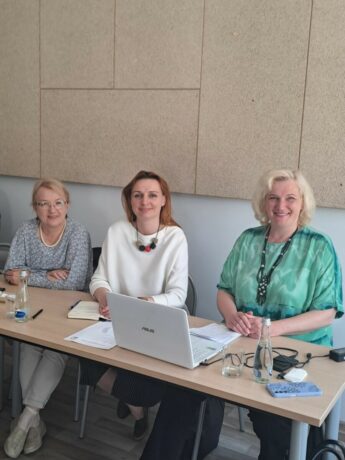
Participants of the SAFEMED+ meeting. Vilnius, May 30-31, 2023 (from left to right: Natalia Lisnychuk, Tetiana Kovalchuk, Natalia Bilkevych)
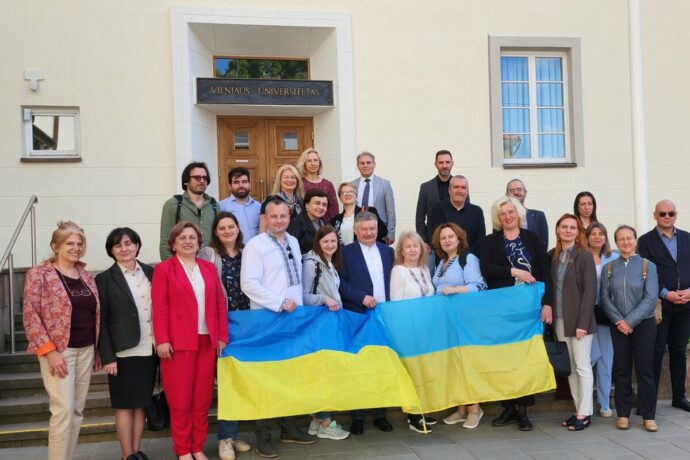
SAFEMED+ international team.
For three years, our university has been an active participant in the SAFEMED+ project, and although this time coincided with the period of the pandemic and the war in Ukraine, a lot of work was carried out within the framework of the project: with the funds of this EU grant, educational facilities of TNMU Simulation Centre were substantially improved, which significantly expanded the opportunities of students to development of practical skills; based on the best European experience, the method of conducting an objective structured clinical examination (OSCE) at our university has been improved. Curricula for simulation training today essentially comply with the best standards of European countries.
The effective work of the project participants in the main areas of its activity is coming to an end, therefore the main issues discussed at the meeting were the presentation by each participating university of its achievements within the framework of the project, as well as the discussion of ways to publicize and distribute its results. In particular, the final discussion of the previous version of the manual on the organization of OSCE and other printed materials was carried out.
One of the important tasks of the project was the creation of a number of posters on basic clinical skills, which can and will be used to teach students both on the basis of the simulation training centre of the university and on the basis of specialized departments.
We presented 5 posters:
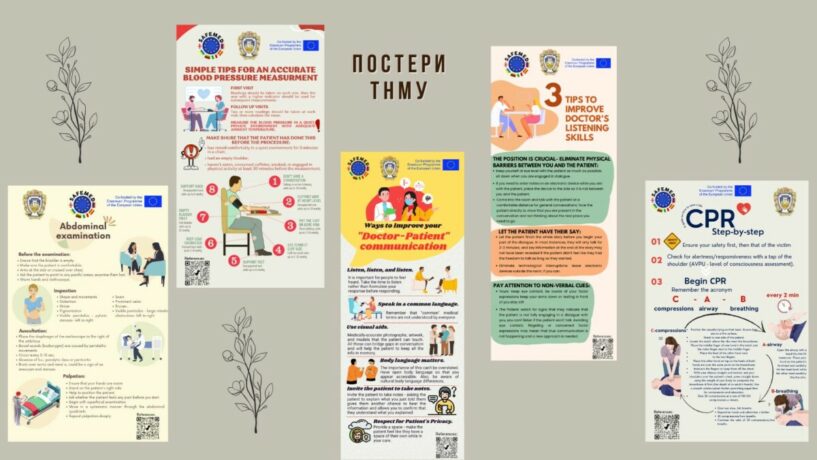
It was exceptionally pleasant when all participants of the work meeting unanimously recognized our posters as one of the best.
In addition, the theme of the organization of OSCE with the use of computer-simulated cases (CCS-OSCE), which all universities participating in the project are interested in implementing, has found its continuation, since this format makes it possible to increase the reliability of exam results, test students’ clinical thinking and make the exam more adaptable to changing modern realities.
The meeting started exactly at the time when most of the universities participating in the project were having exams, including OSCE, so everyone had something to talk about their achievements. It should be noted that TNMU is one of the best in this regard, because, despite the pandemic and war in our country, it was possible to significantly increase the capacity of the simulation centre and organize the practical work of its students, doubling the number of academic hours and introducing these classes into the academic programs of specialized departments, as well as to create a whole module of simulation training for final year students of the Faculty of Medicine. In addition, during the work in the project, the experience of European countries was constantly implemented in the OSCE methodology at TNMU, which was facilitated by the constant participation of the members of the working group on the organization and implementation of this exam at our university in the project. As a result, the methodological approaches to conducting the OSCE were improved, a methodological basis was created for conducting the exam as part of the Unified State Qualification Exam (USQE) for TNMU graduates. This exam was successfully conducted in a new format for the 6-year students.
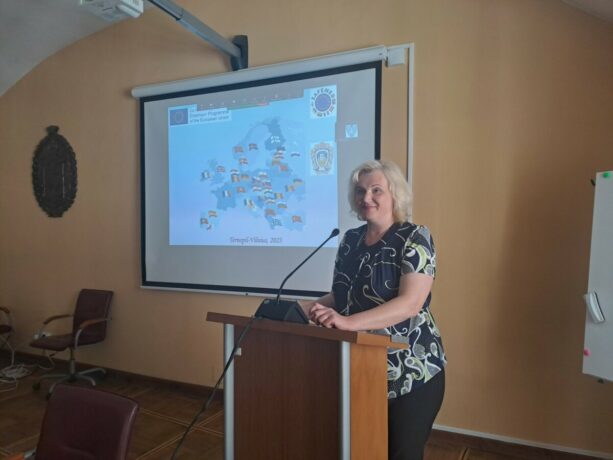
Natalia Bilkevych reporting on TNMU’s achievements in the project.
During the two days, a large part of the allocated time was dedicated to training on the creation of computer-simulated cases for CCS-OSCE, conducted by colleagues from the University of Santiago de Compostela (Spain) Victor Arche and Jose Costoya. In the universities of Spain, CCS-OSCE has shown its great potential in the conditions of distance work of students during the worldwide pandemic and is currently included in OSCE as part of the national qualification exam. For higher medical education institutions of Ukraine, the CCS-OSCE exam format can be used in case of continuing distance work of students. In addition, it is optimal for evaluating the clinical thinking of students during the practical exam.
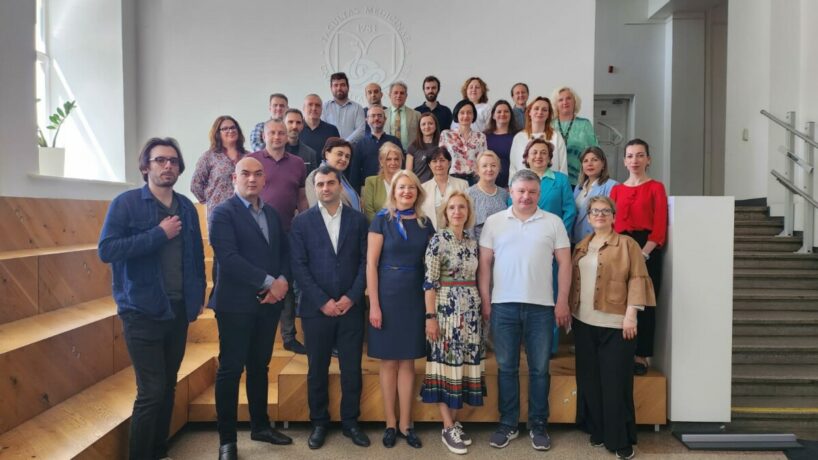
Training participants during work at the Faculty of Medicine of Vilnius University.
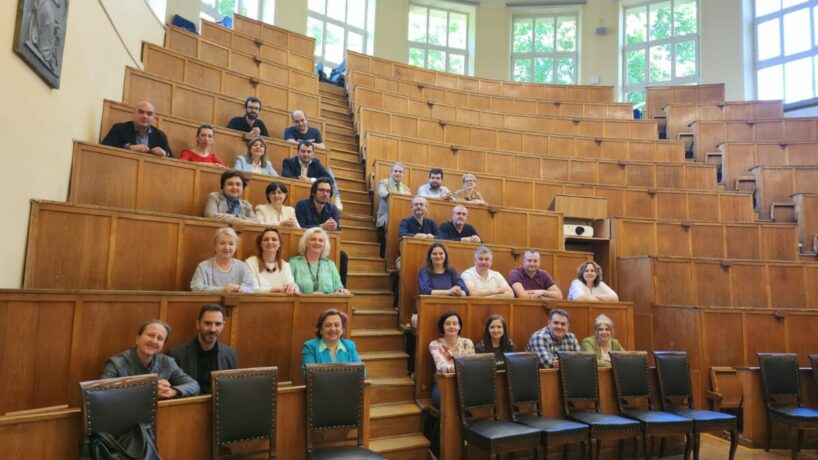
In the first student auditorium of the Faculty of Medicine of Vilnius University, which in the past served as an anatomical theatre. These walls breathe history.
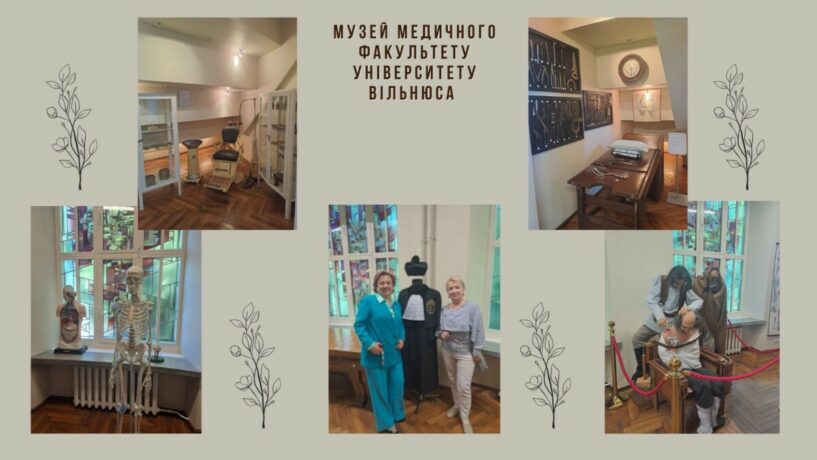
In the museum of the Faculty of Medicine of Vilnius University
Offline meetings of project participants are very productive in terms of sharing experience and joint work on the realization of its goals. During the joint meetings, all participants became closer, found many points of contact and became one big “SAFEMED+ family”, which plans to continue joint work and exchange of experience even after its completion.
The trip to Vilnius gave an opportunity to visit important places of the city and touch the history of Lithuania. We cannot fail to note the friendly attitude of Lithuanians, which we felt on the streets of Vilnius, where Ukrainian flags can be found on almost every street of its central part.
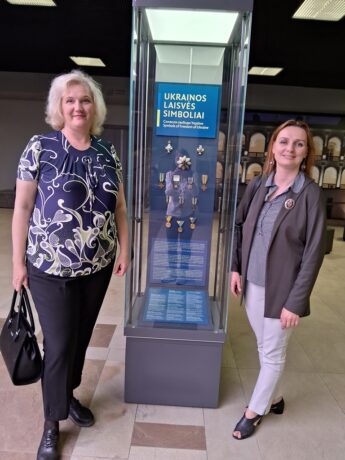
During a tour of Vilnius Castle, which also serves as a historical museum. Near the stand of Ukrainian military awards.
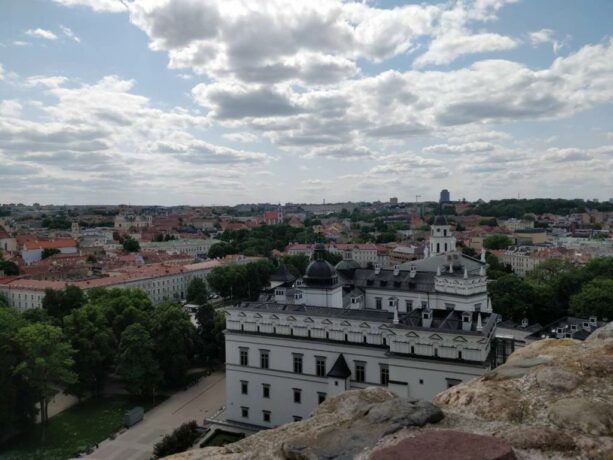
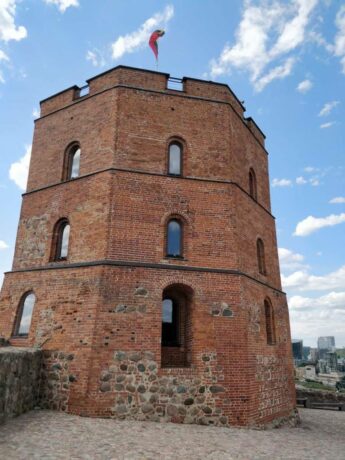
View of Vilnius from the highest point of the city – Gedeminas’ Tower.