


TNMU Students Successfully Passed OSCE
From March 26 to April 23, 2024, the 3rd-, 4th- and 5th-year students took the Objective Structured Clinical Examination (OSCE). A total of 765 Ukrainian students and 82 international students participated in the exam. Successful completion of this form of final assessment is very important for the students as it is the admission to the examination session. The results of this year’s exam demonstrated a high level of our students’ professional training.
Approaches to the preparation and conducting of OSCE at the university generally meet the requirements of Europe, the USA and Canada. With the help of OSCE, those competences that cannot be evaluated with the help of tests, but which are important for the practical activity of a doctor, are evaluated.
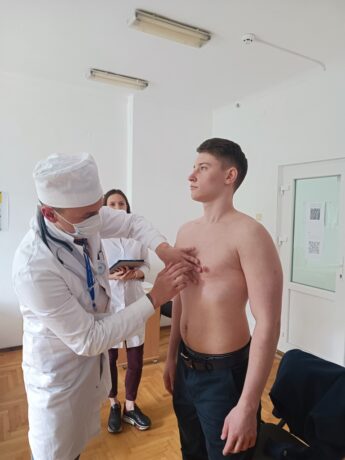
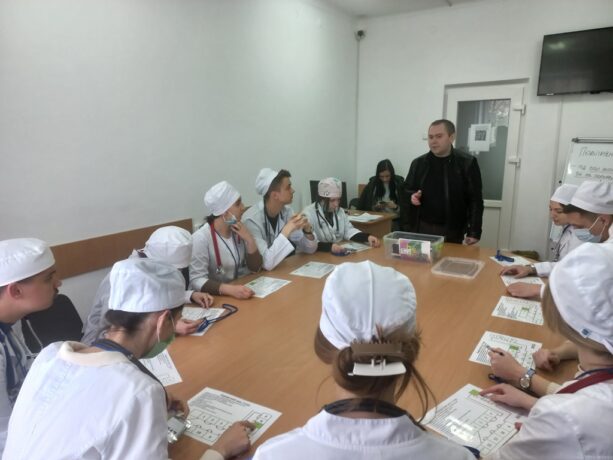
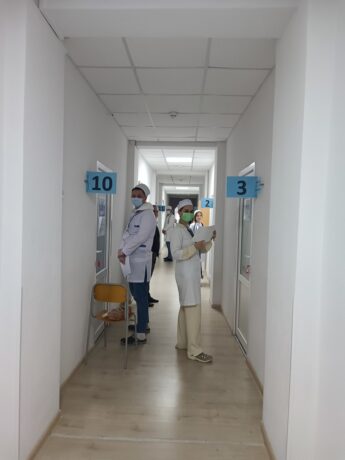
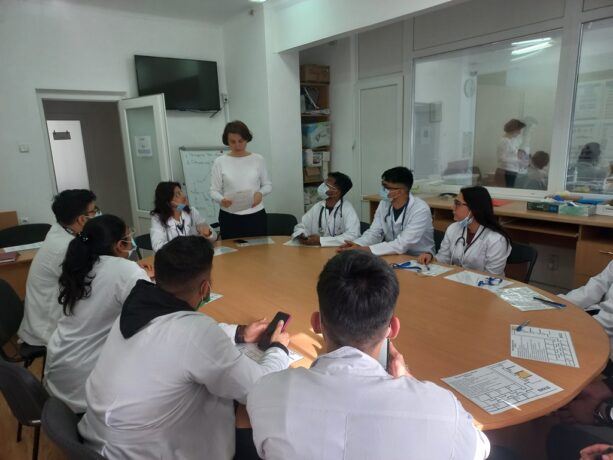
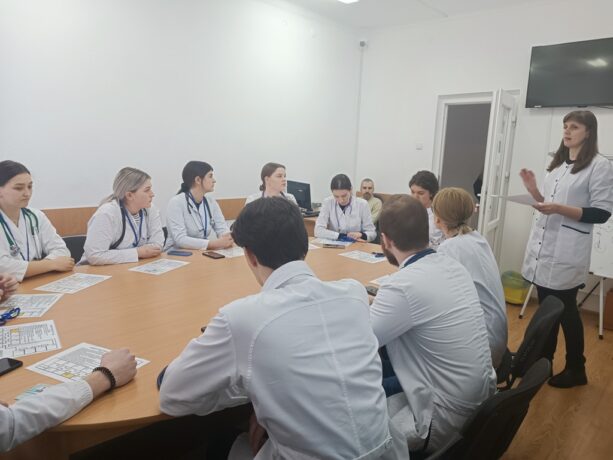
All examination conditions are as close as possible to real ones, so that students can best demonstrate communication skills, the ability to perform medical manipulations, perform a physical examination (basic practical and complicated (manual) skills), interpretation of pathological changes (symptoms and syndromes), cognitive skills, etc. This approach is not only an element of assessing students’ knowledge and skills, but also an element of learning and transformation of theoretical knowledge and practical skills into professional competence.
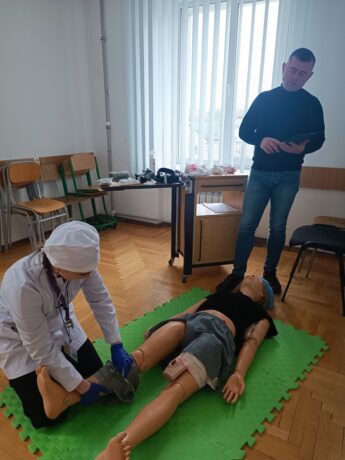
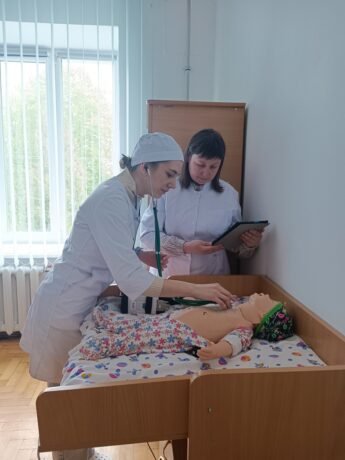
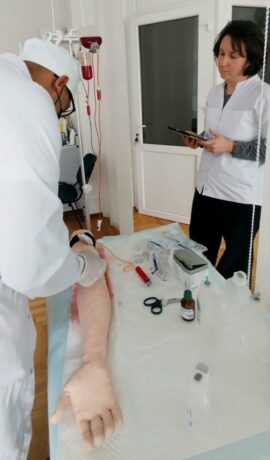
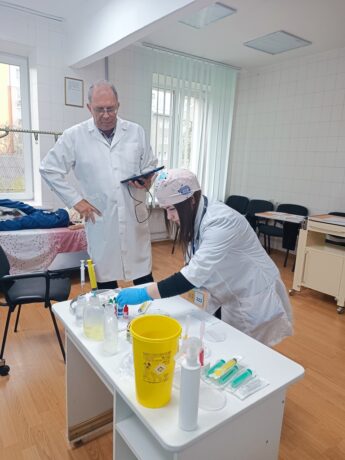
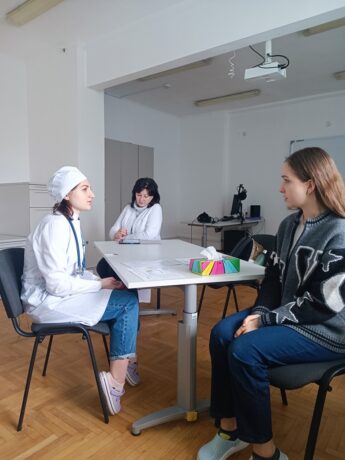
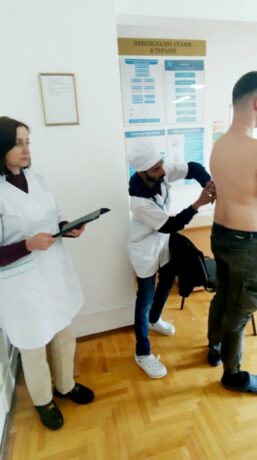
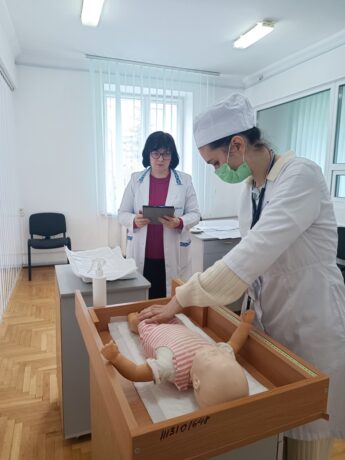
For effective organization of work and creation of appropriate conditions at the station, standardized patients were used for questioning the patient, mannequins for demonstrating technical skills in physical examination, a set of laboratory-instrumental test results for their interpretation, diagnosis and selection of treatment tactics. However, a significant part of the stations are complex, when different types of skills are evaluated at one station, especially for the 4th- and 5th-year students.
A significant difference from European institutions and an innovation of our university is the use of electronic checklists and specially developed software, which makes it possible to automatically calculate results, increase the objectivity of evaluation, speed up the processing of results and save resources.
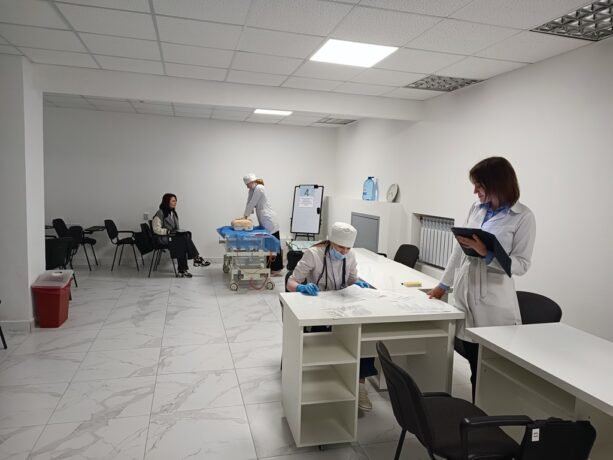
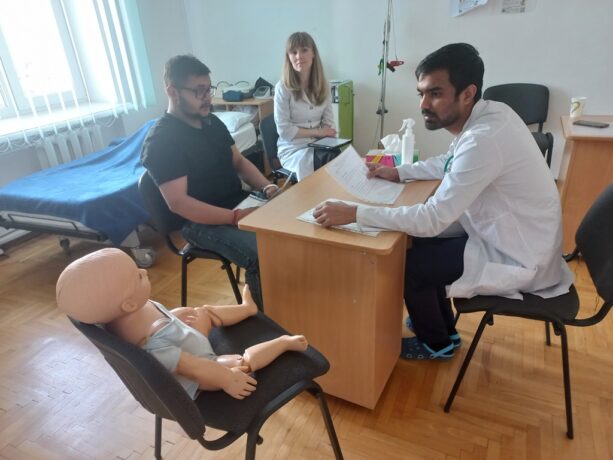
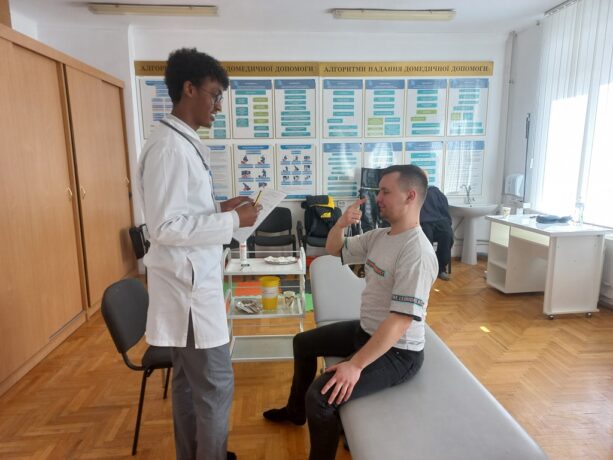
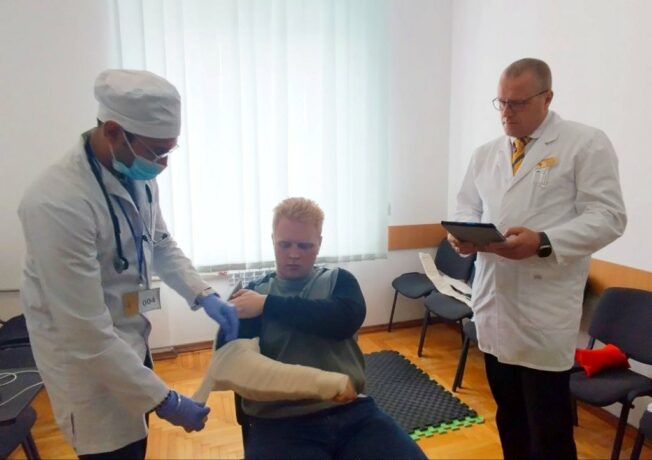
The exam involves the creation of equal conditions for all students, therefore, for distance learning students, the exam was developed and organized in the form of a virtual simulation of clinical cases. This method of conducting the exam was introduced thanks to the university’s participation in the “Simulation in Undergraduate MEDical Education for Improvement of SAFEty and Quality of Patient Care” SAFEMED+ project within the Erasmus+ КА2 CBHE program with the participation of partners from Georgia, Armenia, Italy, Spain, and Lithuania. 24 third-year students, 16 fourth-year students and 38 fifth-year students took advantage of this opportunity.
The safety of students and teachers is a priority aspect of the educational process of our university. This year, some students and teachers had to go down to the shelter, where similar stations were deployed, and continue the exam there.
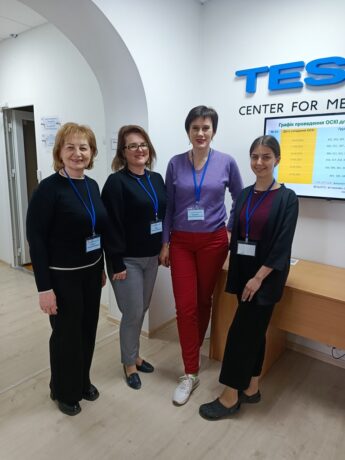
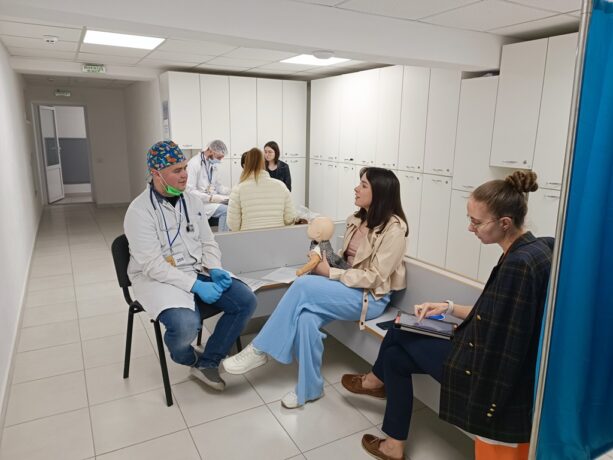
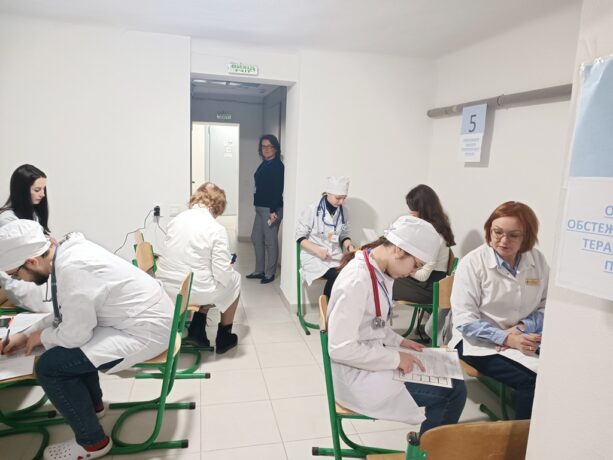
The organization of the exam is not an easy task and requires the coordinated work and responsible attitude of a whole team of diverse specialists, which, in addition to the teachers who develop the methodological base of the stations and conduct student evaluations, include OSCE coordinators, course curators, technical secretaries, employees of the interdepartmental educational and training centre, and people who ensure the technical organization of the exam structure.
The information was provided by the working group on the organization and conduction of OSCE at TNMU Nataliia Petrenko, Nataliia Haliyash, Nadiia Pasiaka.
Photographs by the authors.