

TNMU Students Conduct Interactive Sessions for Students of Ternopil Secondary School No. 24
Throughout November 2025, fifth-year medical students of TNMU, Alina Vashkovets and Nadiia Sidelnyk (MM-515), under the supervision of Associate Professor of the Department of Psychiatry, Narcology, and Medical Psychology Olha Liuta, conducted a series of interactive educational sessions for 7th–9th grade students of Ternopil Secondary School No. 24.
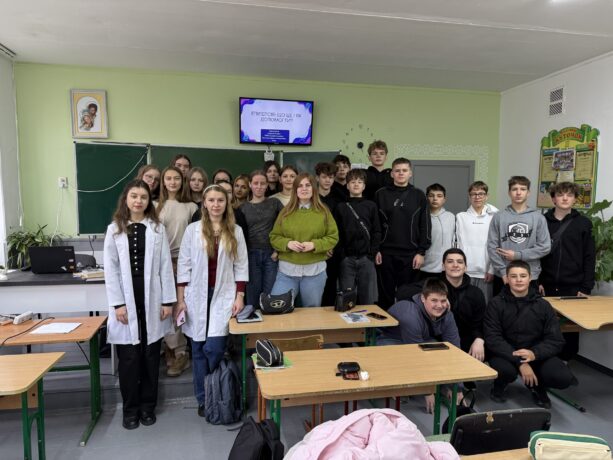
The project aimed to enhance teenagers’ medical literacy, promote responsible attitudes toward personal health, and develop basic first aid skills. The students delivered three sessions, each tailored to a specific age group and incorporating practical exercises, discussions, and open dialogue.
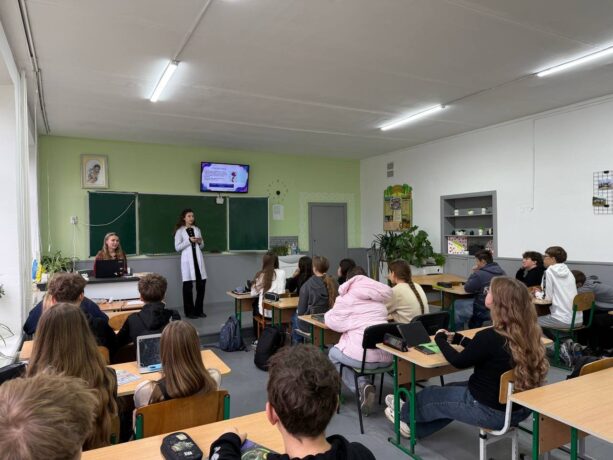
The first lecture, “Epilepsy: What It Is and How to Help,” for 9th-grade students focused on understanding epilepsy and appropriate actions during a seizure. The presenters explained, in accessible language, what epilepsy is, the types of seizures, how to recognize them, and what actions to avoid. A special point of interest was the demonstration of the first aid algorithm—from ensuring safety to steps that can prevent complications and save a life. The students actively asked questions, shared personal observations, and participated in discussion. This format allowed them not only to learn theoretical aspects but also to appreciate the importance of timely and appropriate reactions in real situations.
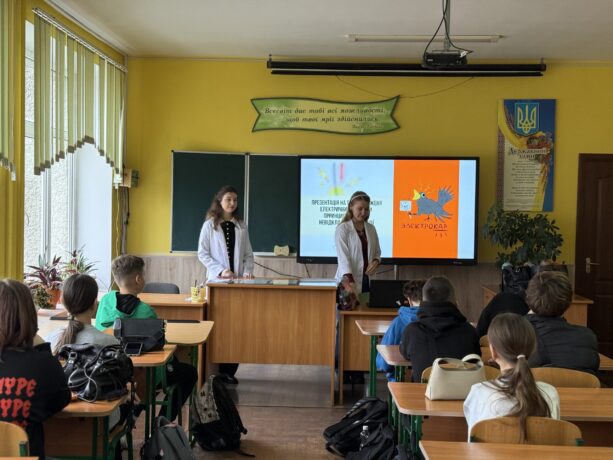
The second session, “Electric Shock Injuries: Principles of Emergency Care,” was dedicated to safety related to electrical trauma. Seventh-graders learned about the dangers of electric current, risks in everyday situations, and potential consequences of electric injuries. The presenters went through a step-by-step algorithm of actions in case of electric shock, including:
- how to ensure personal safety;
- how to stop the flow of electricity;
- when and how to call emergency services;
- which symptoms require urgent attention;
- how to act before medical personnel arrive.
The students discussed real-life situations, analyzed risks, and collaborated to identify the correct responses. This contributed to a deeper understanding of danger mechanisms and necessary actions.них дій.
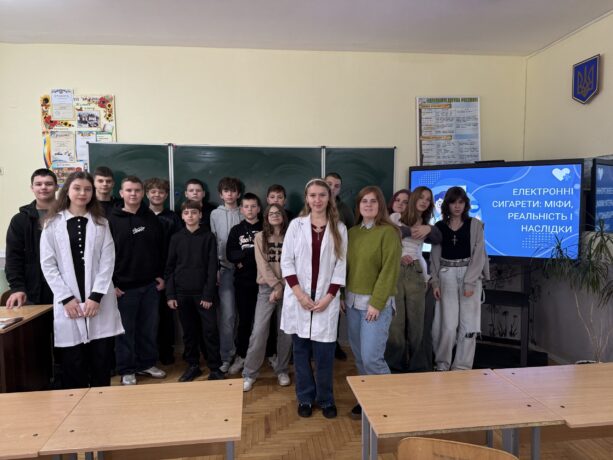
The session “Electronic Cigarettes: Myths, Reality, and Consequences” for 8th-grade students addressed one of the most pressing issues among modern youth—vaping. The presenters explained the composition of e-liquids, how aerosol affects the body, and debunked the widespread myth of e-cigarettes being “safe.” They emphasized the impact of vaping on the lungs, cardiovascular and nervous systems, the risk of nicotine addiction, and possible long-term consequences. Students asked many questions, particularly regarding the effects of vaping on athletic performance, concentration, and overall well-being. The open-dialogue format encouraged critical thinking and a more conscious approach to health.
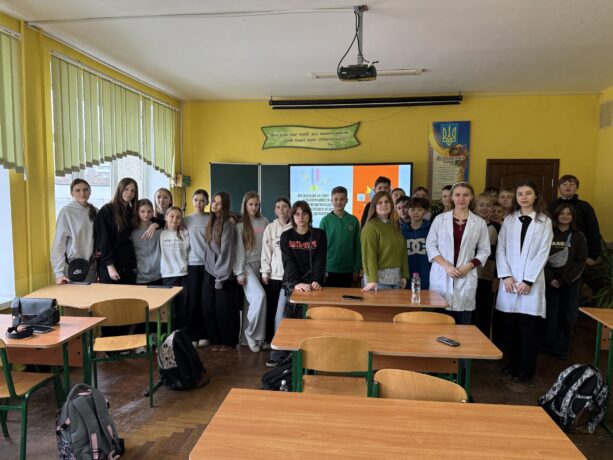
The project demonstrated that teenagers are eager to engage in meaningful discussions about health and safety, and that interactive lectures are an effective way to foster responsible attitudes toward oneself and others.
TNMU students showed a high level of preparation, professionalism, and the ability to work with youth. The collaboration between the university and city schools once again highlighted the importance of medical education for the community.