

Results of the “Psychiatry. Clinical Psychology” Section at the XXX Congress of Students and Young Scientists of TNMU
On April 1, 2026, a meeting of the “Psychiatry. Clinical Psychology” section was held within the framework of the XXX Congress of Students and Young Scientists “The Future Belongs to Science,” organized by I. Horbachevsky Ternopil National Medical University.
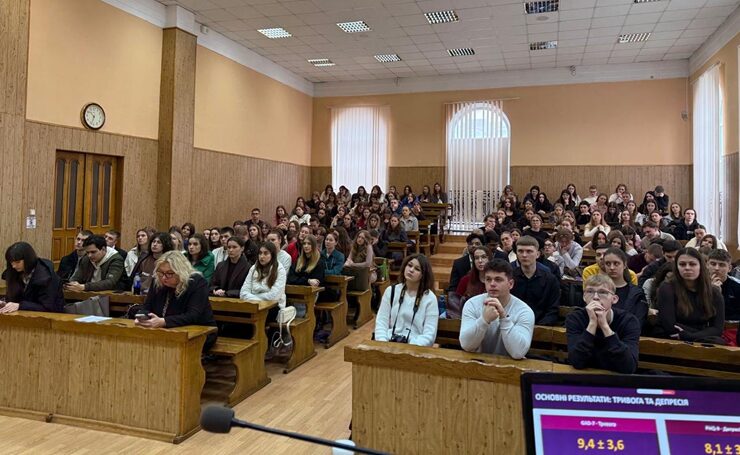
More than 200 young researchers interested in current advances in psychiatry and clinical psychology participated in the section. The event was moderated by students Anastasiia Pryvrotska and Yuliia Kharkhalis.
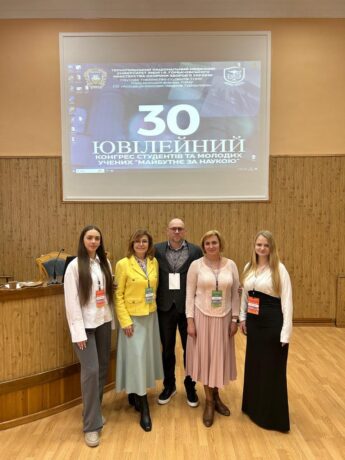
Scientific supervision of the section was provided by the Head of the Department of Psychiatry, Narcology, and Medical Psychology, Professor Olena Venger, Professor Yurii Mysula, and Associate Professor Lesia Sas.
During the session, 26 oral presentations were delivered, covering a wide range of актуальні issues in psychiatry and clinical psychology. The speakers included students from various higher medical education institutions in Ukraine, as well as international students, giving the event an international scientific dimension.
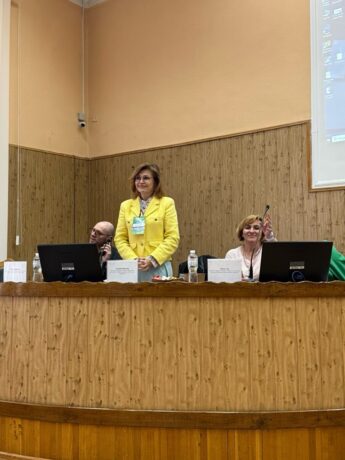
Professor Olena Venher welcomed the participants of the Congress, wishing them productive work, scientific inspiration, and further success in their research activities.
Among the presented research works were:
• Kateryna Babii, Vladyslav Kryvchenko — “Anxiety disorders and sleep disturbances among medical students during the examination period: results of an online survey”
• Nataliia Baboval, Andrii Derii, Anastasiia Kolomiiets — “Digital addiction and the phenomenon of self-diagnosis of mental disorders on social media: a contemporary perspective”
• Mariia Brona, Bohdan Yurchenko, Bohdan Mushenko — “The relationship between the level of alexithymia and the tendency to rationalize emotions among students of Ternopil universities”
• Yelyzaveta Burdiak, Davyd Prysich — “The influence of religion on mental health”
• Tetiana Denysenko — “Psychological flexibility, interoceptive awareness, and quality of life of military personnel in conditions of armed conflict”
• Vitalii Kachuriak — “Erich Fromm’s The Art of Loving in the perception of student youth”
• Ostap Kvasnitskyi, Olena Kulianda, Danylo Kutsenko — “Stress levels and psychosomatic condition of medical students during martial law”
• Liudmyla Levchuk — “Appropriateness of psychotropic prescriptions in patients aged 65+ according to Beers and STOPP/START criteria: an analytical review of clinical outcomes”
• Viktoriia Lehka, Mariia Niunia — “The influence of social media on the development of eating disorders”
• Vladyslav Matvieiev, Anna Hryshchuk, Marta Kutsobina — “Comparative assessment of anxiety levels in patients with opioid use disorder and individuals without opioid dependence”
• Olena Nychyk, Alina Volska — “The role of a clinical psychologist in psychological support of women after assisted reproductive technologies”
• Yelyzaveta Onishchenko — “The impact of war-related traumatic factors on depression relapse”
• Dariia Oreshchenko, David Klopotovskyi — “Comparative frequency of disorders in patients treated with atypical and typical antipsychotics”
• Albina Pylypchuk, Andrii Svirzhevskyi — “Features of artistic and creative abilities in paranoid schizophrenia and schizoaffective disorder”
• Maksym Pidlisnyi — “The level of analytical thinking development in future clinical psychologists”
• Danylo Popovych, Elina Mysula, Karina Sum — “Fregoli syndrome: a clinical and psychopathological analysis of misidentification disorders”
• Olha Robeiko, Anastasiia Kovalchuk, Mariia Brona — “The impact of chronic stress on cognitive functions of medical students”
• Olha Robeiko, Anastasiia Kovalchuk, Mariia Brona — “Analysis of the impact of changes in the learning environment on students’ academic performance”
• Evelina Sas, Elina Mysula, Maksym Makovetskyi — “Dynamics of autonomic regulation in adjustment disorders: interpretation of heart rate variability indicators in light of the Wu Xing concept”
• Sofiia Chornii, Elina Mysula — “The impact of testosterone replacement therapy on the psycho-emotional state of men”
• Polina Shyrai — “Interoceptive awareness in widows of Ukrainian defenders with prolonged grief disorder, considering the level of alexithymia”
• Sofiia Shyshka — “Memories without feelings: the phenomenon of impaired emotional memory after psychological trauma”
Presentations by international participants were also featured, highlighting the global nature of the event:
• Ahmed Ibrahim, Syed Mohd Anas — “The impact of war exposure on imposter syndrome and mental health among university students in Ukraine”
• Oliwia Froń, Dominika Szczepańska, Kamila Maria Koszykowska — “Pregnanteen: original research,” Medical University of Bialystok (Poland)
• Inna Korda, Ahmed Ibrahim, Shaikh Mohammed Faizan — “Imposter syndrome, academic disruption, and mental health among international students during the war in Ukraine: on-campus vs. remote study comparative study”
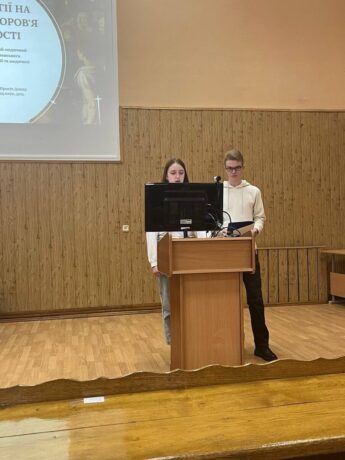
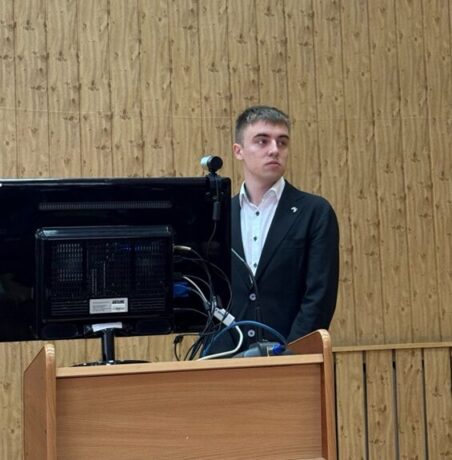
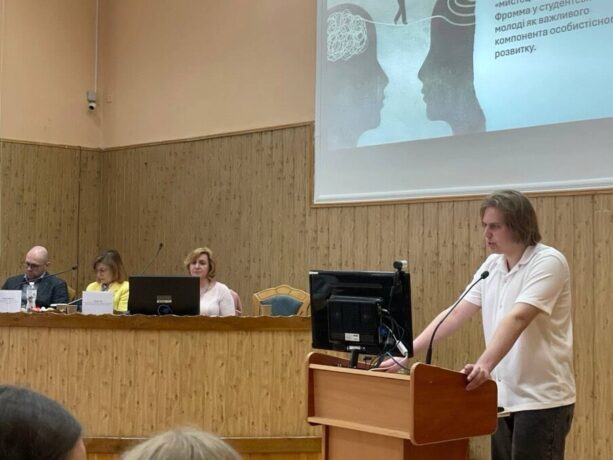
Based on the results of the section, prize winners were determined. All presentations demonstrated a high scientific level, relevance, and practical significance.

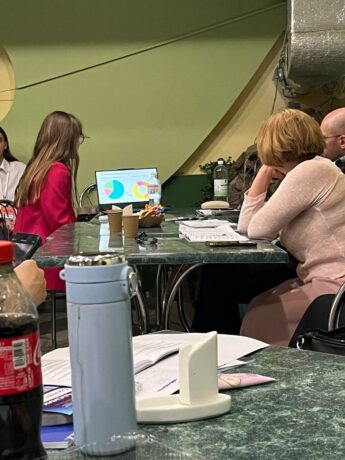
Despite an air raid alert, the session continued in a shelter, highlighting the resilience and dedication of young researchers to science even in wartime conditions.
The winners were selected based on the overall quality of research, relevance of topics, and presentation skills.
Prize winners:
1st place:
• Ahmed Ibrahim, Inna Korda, Shaikh Mohammed Faizan
• Tetiana Denysenko
• Vitalii Kachuriak
• Ostap Kvasnitskyi, Olena Kulianda, Danylo Kutsenko
• Evelina Sas
• Sofiia Chornii, Elina Mysula
2nd place:
• Ahmed Ibrahim, Syed Mohd Anas
• Danylo Popovych
• Nataliia Baboval, Andrii Derii, Anastasiia Kolomiiets
• Nadiia Nikulina, Iryna Yatsukh
• Olha Robeiko
• Polina Shyrai
• Sofiia Shyshka
• Oliwia Froń
3rd place:
• Kateryna Babii, Vladyslav Kryvchenko
• Mariia Brona, Bohdan Yurchenko, Bohdan Mushenko
• Yelyzaveta Burdiak, Davyd Prysich
• Liudmyla Levchuk
• Viktoriia Lehka, Mariia Niunia
• Vladyslav Matvieiev, Anna Hryshchuk, Marta Kutsobina
• Yelyzaveta Onishchenko
• Dariia Oreshchenko, David Klopotovskyi
• Albina Pylypchuk, Andrii Svirzhevskyi
• Maksym Pidlisnyi
The presented studies reflect a high level of scientific thinking among young researchers, their ability to deeply analyze contemporary mental health issues, and their commitment to professional growth. The achievements of the participants demonstrate the emergence of a new generation of specialists who combine scientific competence, clinical thinking, and sensitivity to current challenges.
The Head of the Department of Psychiatry, Narcology, and Medical Psychology, Professor Olena Venher, sincerely congratulated the participants, emphasizing that such motivated, thoughtful, and dedicated young scientists represent not only the future of science but also the future of the nation’s mental health.