

Foreign Languages Week at TNMU
From April 20 to 24, 2026, the Department of Foreign Languages at I. Horbachevsky Ternopil National Medical University hosted Foreign Languages Week. The department’s lecturers—Professors Nadiia Fedchyshyn and Tetiana Khvalyboha; Associate Professors Nataliia Yelahina, Mariia Kichula, Nataliia Hantimurova, Ivanna Humenna, Halyna Kitura, Iryna Prokop, Halyna Klishch, and Mariia Bobak—organized engaging interactive sessions in English and German.
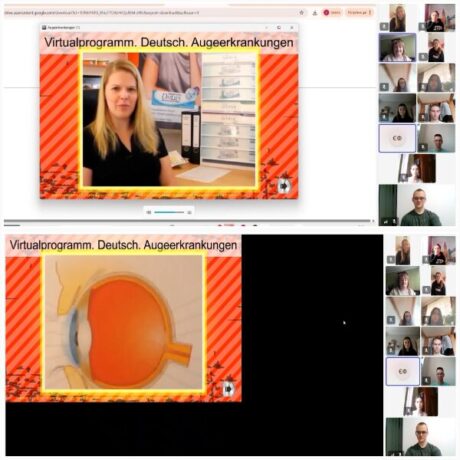
The Head of the Department, Professor Nadiia Fedchyshyn, conducted an informative and interactive class on German medical terminology for medical students (group MM-219) on the topic “Sense Organs. Diseases of the Eye and Ear.” Students actively participated by presenting prepared materials, demonstrating not only their knowledge of specialized German vocabulary but also their ability to apply it in a professional context. Particular attention was paid to terminology related to the anatomy of sense organs and common eye and ear diseases. This format contributed to developing students’ professional language competence, confidence in using a foreign language, and readiness for intercultural professional communication.
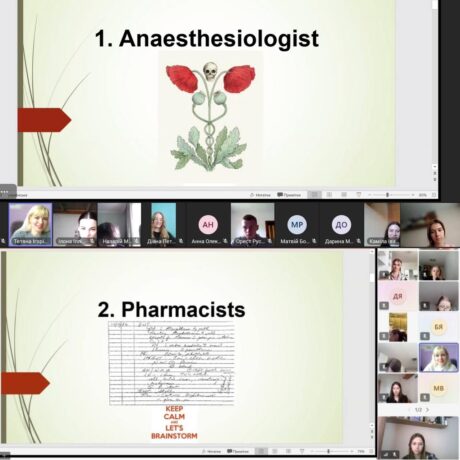
Professor Tetiana Khvalyboha organized an intellectual game, Brainstorm, for students of groups MM-207 and MM-103. During the event, participants competed in English, answering various medical questions that required both professional knowledge and quick thinking. The game effectively combined erudition and professional training with the development of language competence, fostering teamwork, clinical thinking, and English professional communication skills. Students were actively engaged in discussions, demonstrating high motivation and enthusiasm, creating an atmosphere of healthy intellectual competition and genuine academic excitement.
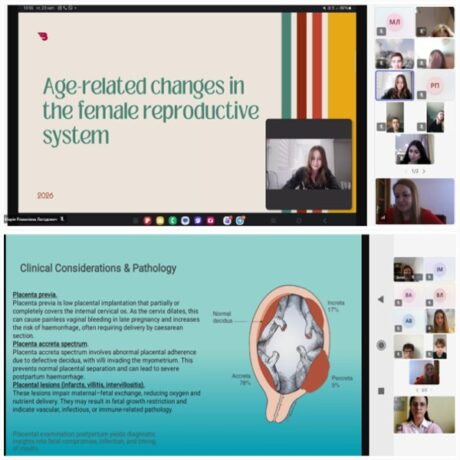
With the support of Associate Professors Nataliia Yelahina and Mariia Kichula, an interactive English for Specific Purposes class was held for medical students (group MM-202) and dental students (group SS-105). The session, titled “Clinical English Lab: Obstetrics & Pediatrics in Practice,” combined elements of learning, discussion, and teamwork. Participants explored basic medical terminology and professional communication features in obstetrics and pediatrics. Through mini-presentations and interactive tasks, students enhanced both their professional language competence and essential soft skills, including communication, critical thinking, teamwork, and public speaking.
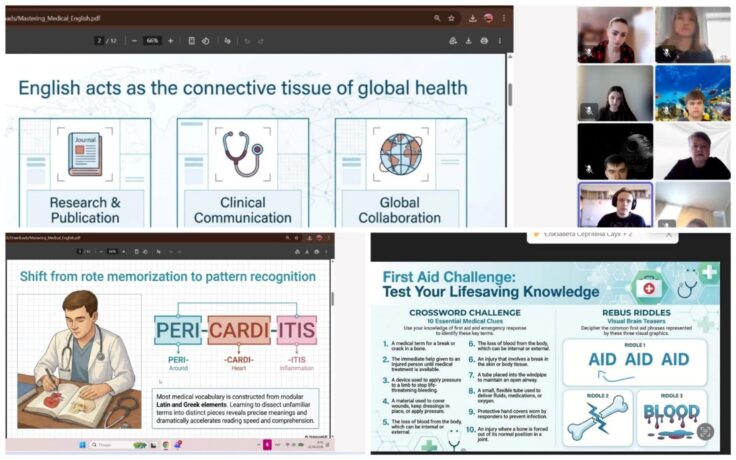
Students of group MM-114 demonstrated creativity and strong engagement during an English class on “First Aid in Emergency Conditions,” led by Associate Professor Iryna Prokop. They prepared presentations, creative tasks, crosswords, puzzles, and quizzes, showing a high level of interest in professional English. A separate part of the class emphasized the importance of English (“English acts as the connective tissue of global health”) and the structure of complex medical terms. The session fostered logical thinking, communication skills, creativity, and intellectual curiosity.
Associate Professor Halyna Kitura conducted dynamic and creative classes in “English for Professional Purposes” for first-year dental (group SS-107) and medical (group MM-112) students. Dental students presented the topic “Xerostomia” with a creative approach, highlighting the importance of English in mastering dental terminology and professional practice. Medical students demonstrated a deep understanding of “The Circulatory System” through interactive presentations and teamwork, demonstrating strong communication skills and a confident use of professional vocabulary.
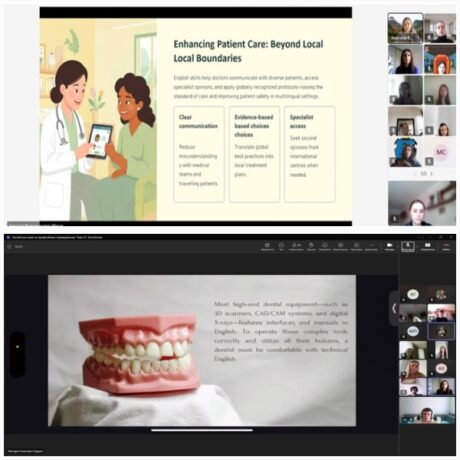
During classes led by Associate Professor Ivanna Humenna, students demonstrated a high level of preparation and professional interest. Medical students (groups MM-115 and MM-117) focused on the role of English as an essential component of a modern physician’s professional activity. Dental students (group SS-103) presented research on the etiology and prevention of gingivitis, while medical students (group MM-101) introduced first aid algorithms for emergency conditions. These sessions contributed to expanding professional knowledge and enhancing language skills.
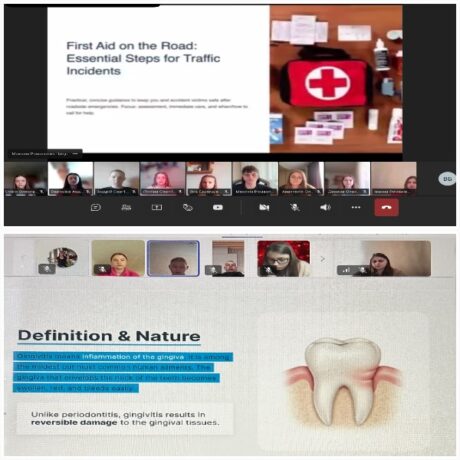
Associate Professor Nataliia Hantimurova, together with students of groups SS-104 and MM-211, conducted interactive sessions on medical translation. Students worked активно with professional vocabulary, improved translation skills, and analyzed challenges in rendering medical terminology in English. The use of presentations, thematic crosswords, and interactive platforms made the learning process dynamic and engaging. Students also explored early representations of medicine in English-language literature, broadening both professional and cultural perspectives.
Associate Professors Tetiana Savaryn, Roman Kotsiuba, Ivanna Vorona, and Halyna Palasiuk delivered a series of Latin language classes, successfully combining classical academic approaches with modern interactive methods.
First-year students (groups MM-111 and MM-112), during Latin classes on “Liquid Dosage Forms” and “Semi-solid Dosage Forms” led by Associate Professor Tetiana Savaryn, presented on the history, prescription writing, innovations, and interesting facts about these pharmaceutical forms. Students used creative methods such as puzzles, crosswords, and interactive games to engage their peers.
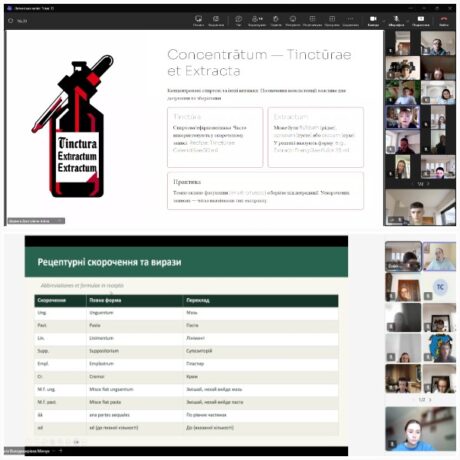
Students of group SS-103, during a Latin class led by Associate Professor Roman Kotsiuba, presented on the role of Latin in medicine and dentistry, its history, and its importance as the foundation of medical terminology. They discussed its application in anatomy, pharmacology, diagnostics, and prescriptions, emphasizing its role as an international language of medicine.
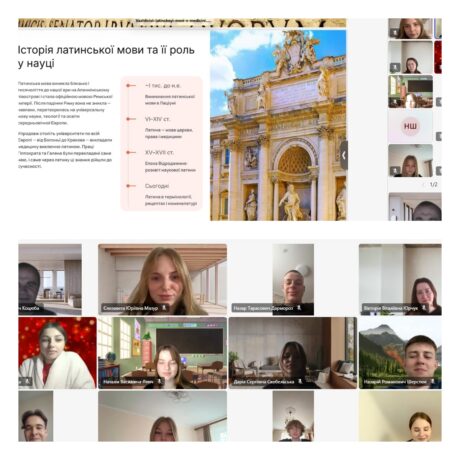
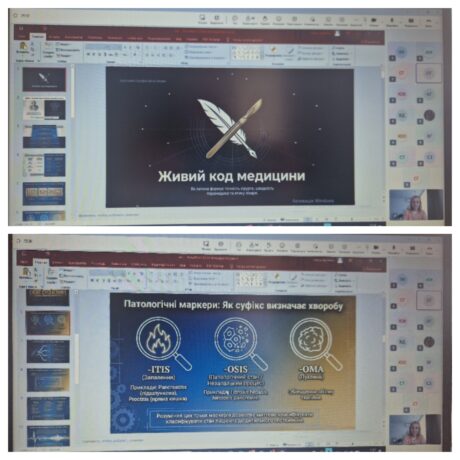
Associate Professor Ivanna Vorona, together with first-year medical students (groups MM-104 and MM-117), explored the role of Latin in shaping medical terminology, referring to it as the “code” of medical language. Students analyzed the processes of term formation and discussed the concept of the physician as homo moralis, while also examining the influence of Latin on English medical terminology.
Foreign Languages Week clearly demonstrated that language learning goes far beyond grammar and vocabulary acquisition. It is a powerful tool for developing critical thinking, enhancing communication culture, and fostering creativity among students. We express sincere gratitude to the lecturers for their professional support and to the students for their инициативність and meaningful preparation.