

Professional Internship of an Associate Professor of TNMU Department of Microbiology, Virology and Immunology within the Erasmus+ KA107 Teaching Staff Mobility Programme
From April 20 to 24, 2026, Associate Professor of the Department of Microbiology, Virology and Immunology at I. Horbachevsky Ternopil National Medical University of the Ministry of Health of Ukraine, Nataliia Kravets, completed an internship under the Erasmus+ KA107 Teaching Staff Mobility program at the University of Santiago de Compostela (Spain).
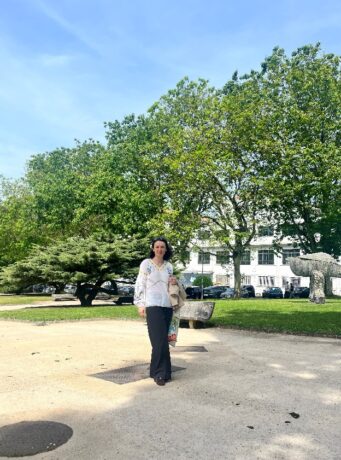
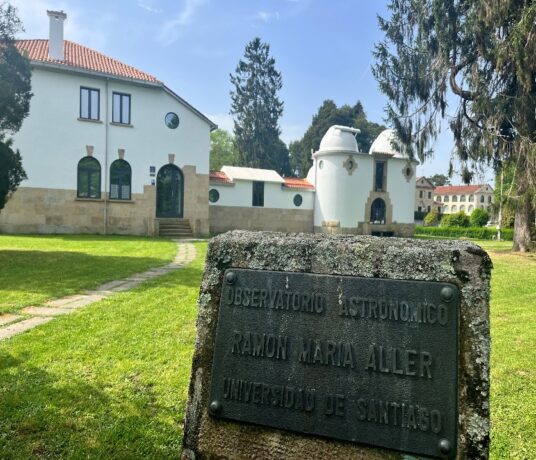
The University of Santiago de Compostela (USC) is one of the oldest higher education institutions in Europe, founded more than 500 years ago. Today, it is a modern academic and research center consistently ranked among the top 15 universities in Spain. Cooperation between USC and TNMU within the Erasmus+ KA107 program provides academic mobility opportunities for faculty members and PhD students of both institutions. Over the course of the project, TNMU representatives have repeatedly undertaken internships at various USC faculties, gaining insight into the organization of the educational process, research, and the university’s clinical base.
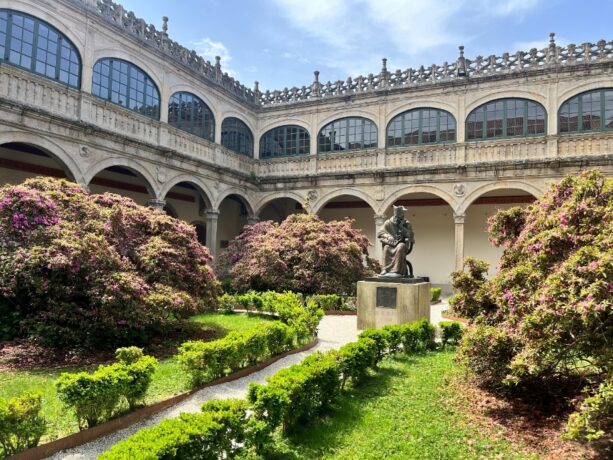
Nataliia Kravets trained at the Faculty of Pharmacy, within the Department of Microbiology and Parasitology. Her work was supervised by the Head of the Department, Professor Ana María Otero Casal, who leads the research group “Biotechnology for the Diagnosis, Treatment, and Prevention of Infectious Diseases.” Professor Otero Casal personally coordinated the visit program, which included educational, research, and clinical components. The department integrates two major fields—microbiology and parasitology—and employs 32 academic and research staff members. They provide teaching for 10 bachelor’s programs, 4 dual-degree programs, 6 master’s programs, and 3 PhD programs. In addition, department specialists are involved in eight research groups at USC.
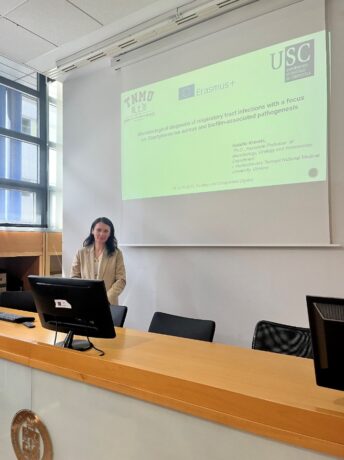
During the mobility program, Nataliia Kravets delivered an open lecture for PhD students, “Microbiological Diagnosis of Respiratory Tract Infections with a Focus on Staphylococcus aureus and Biofilm-Associated Pathogenesis.” The lecture took place at the Center for Research in Molecular Medicine and Chronic Diseases (CIMUS) and sparked active discussion among young researchers.
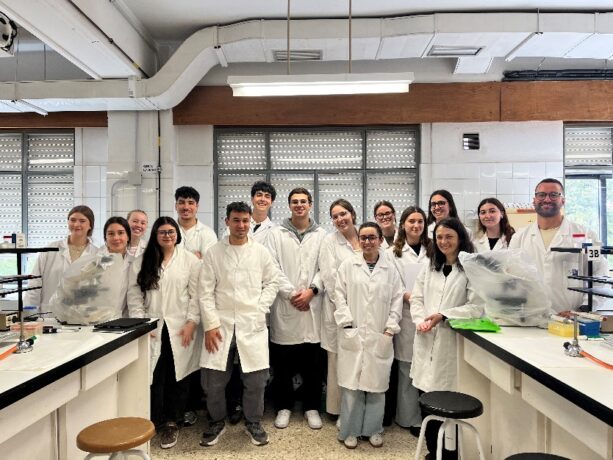
She also had the opportunity to closely observe the organization of practical training for pharmacy students at USC. Together with Professor Javier Dubert Pérez, she participated in a three-day cycle of laboratory classes within the course “Microbiological and Parasitological Analysis.” The program covered the following areas:
- microbiological analysis of urine: quantitative and qualitative cultures, Gram staining, identification using traditional methods and commercial systems;
- clinical microbiology: analysis of ear and vaginal exudates, identification of fungal forms;
- sanitary microbiology: microbiological analysis of air and surfaces, assessment of disinfectant effectiveness;
- molecular genetic methods: identification of microorganisms using PCR;
- antibiotic resistance: studying susceptibility to antimicrobial agents (dilution and diffusion methods, determination of MIC and MBC).
Observation of the educational process and exchange of experience with Spanish colleagues provided valuable methodological insights.
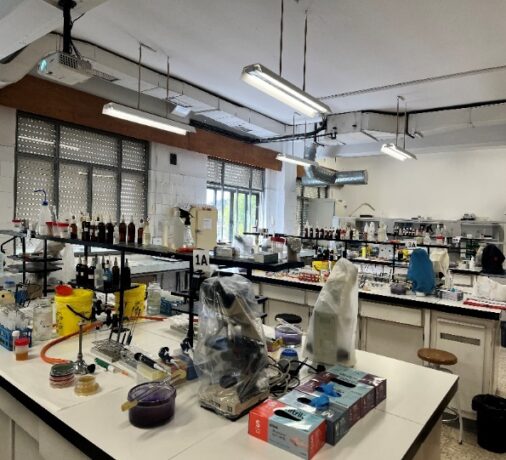
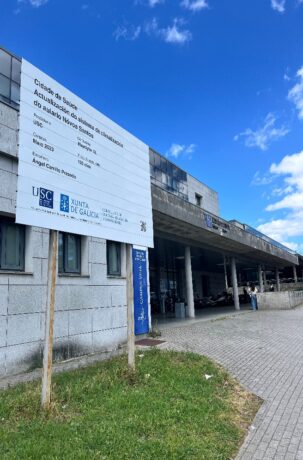
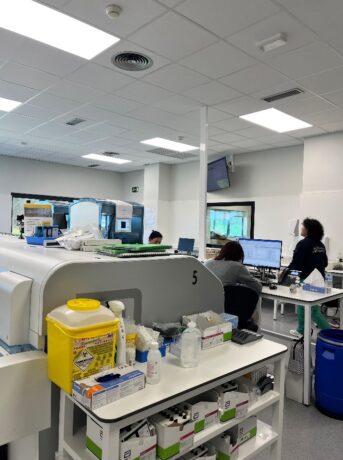
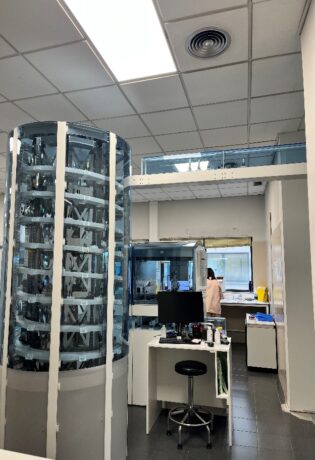
An important part of the visit was familiarization with the laboratory center at the Hospital Clínico Universitario de Santiago, a leading medical institution in the Galicia region. As part of a large-scale modernization launched in 2021, the microbiology laboratory was equipped with state-of-the-art equipment, and the hospital’s total area increased by 30%. Today, this upgraded center serves as a key diagnostic hub in northwestern Spain. It is also where USC medical students undergo practical training in clinical microbiology, mastering advanced diagnostic methods in real clinical settings.
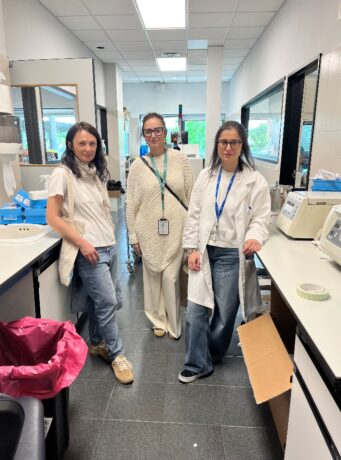
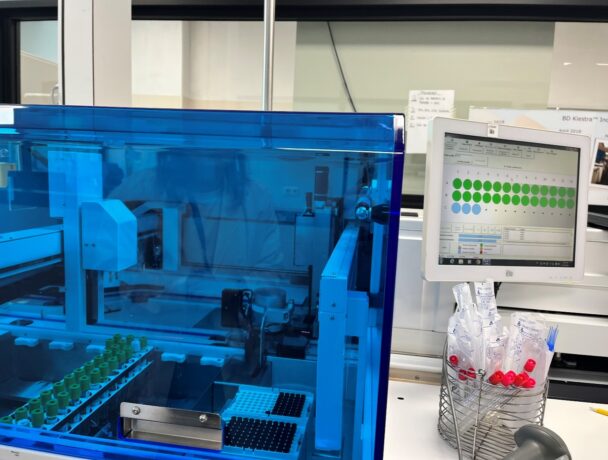
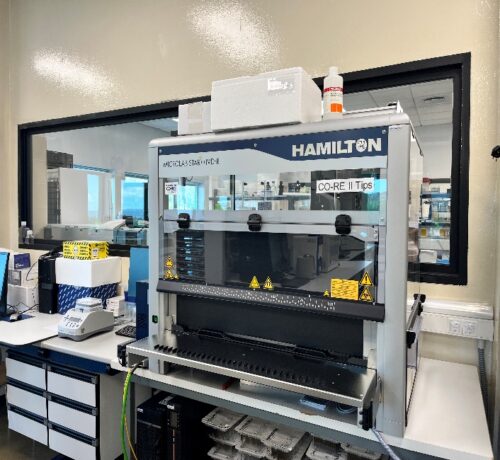
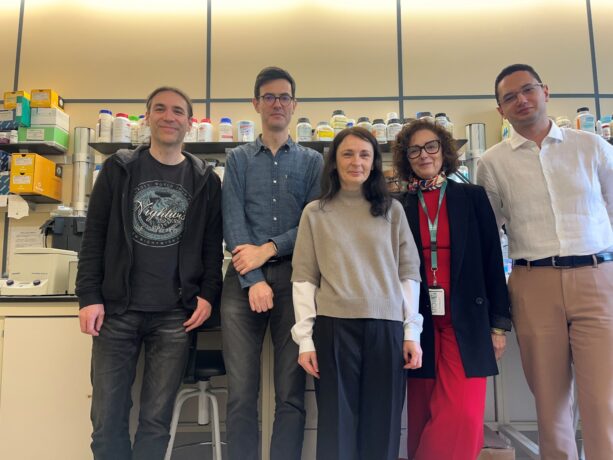
Within the framework of scientific cooperation, Nataliia Kravets met with researchers and PhD students from Professor Otero Casal’s research group at the CIBUS research center. She was introduced to ongoing research projects, particularly in biotechnology for combating infectious diseases, and discussed prospects for joint research initiatives.
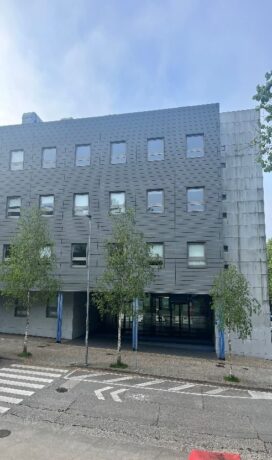
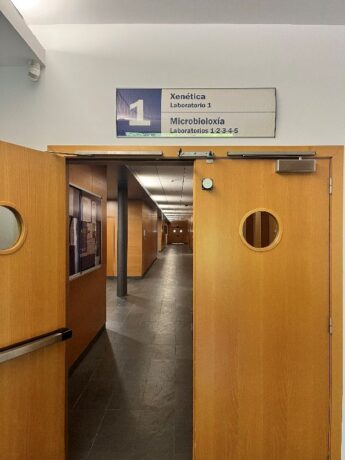
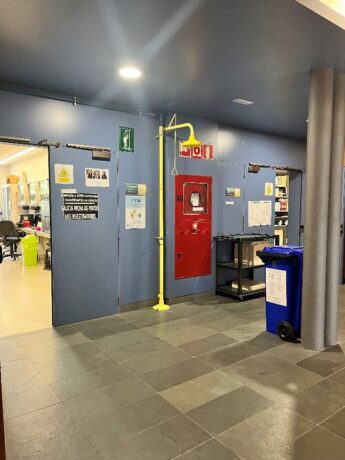
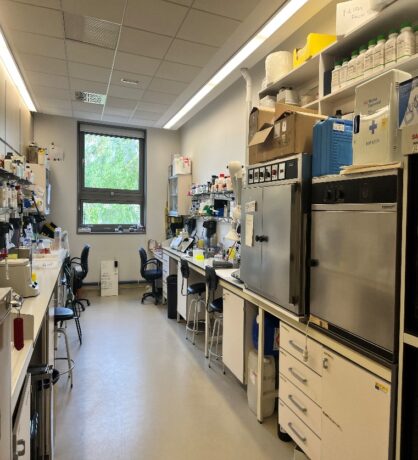
At the Faculty of Pharmacy, she also met with leading researchers: Professor María Sandra Sánchez Poza, who shared her experience in implementing scientific projects, and Professor Trinidad de Miguel Bouzas, who introduced the MicroMundo project—an important educational and research initiative aimed at discovering new antimicrobial compounds. The researchers also discussed the work of PhD students under their supervision and the practical aspects of organizing research activities at the faculty.
During the visit, Nataliia Kravets met with Biotechnology students from USC’s Faculty of Biology. Young researchers presented the results of their scientific work. This interaction enabled discussion of shared research interests and outlined prospects for further academic cooperation between TNMU and USC departments.
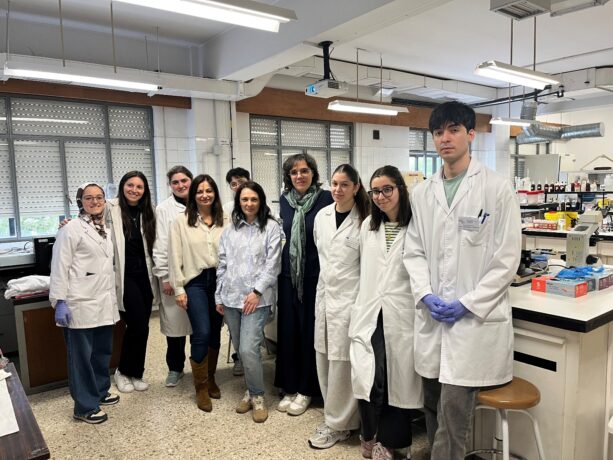
The experience gained during the mobility program is invaluable for further improving the educational process and developing research activities at the Department of Microbiology, Virology, and Immunology of TNMU. The visit opened new avenues for strengthening cooperation between the University of Santiago de Compostela and I. Horbachevsky Ternopil National Medical University.
Nataliia Kravets expresses her sincere gratitude to the administration and the International Relations Office of TNMU, the Erasmus+ KA107 Teaching Staff Mobility coordinator, Ana Guerra, and Professor Ana María Otero Casal for the opportunity, professional support, and assistance in implementing this program.