

A Barrier-Free World Begins Where We Learn to See the Person, Not Their Limitations
First-year master’s students majoring in Therapy and Rehabilitation at I. Horbachevsky Ternopil National Medical University—Nelia Humeniuk and Solomiia Hyz—visited Ternopil Educational Complex ‘Secondary School Lyceum No. 2’, where they delivered a lecture entitled “A Barrier-Free World: How to Communicate Respectfully with People with Disabilities” for students in grades 8–9.
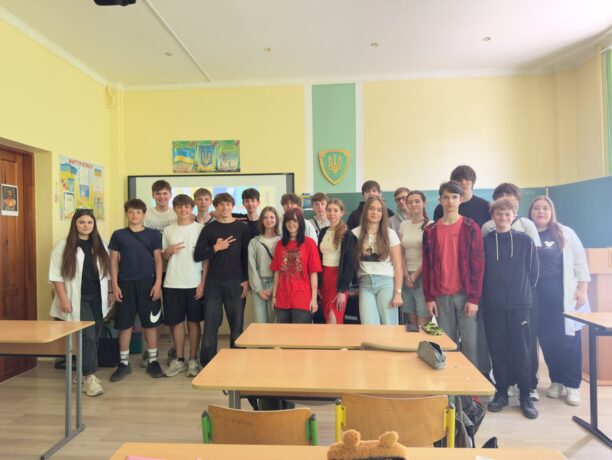
This was more than just a lecture—it was an open and sincere conversation about respect, humanity, and the ability to support others without unnecessary words or awkward gestures.
During the meeting, the school students learned who people with disabilities are and why, above all, they are simply people—individuals who study, work, dream, build friendships, play sports, and possess unique talents. The speakers emphasized that disability does not define a person; it merely describes a particular life experience.
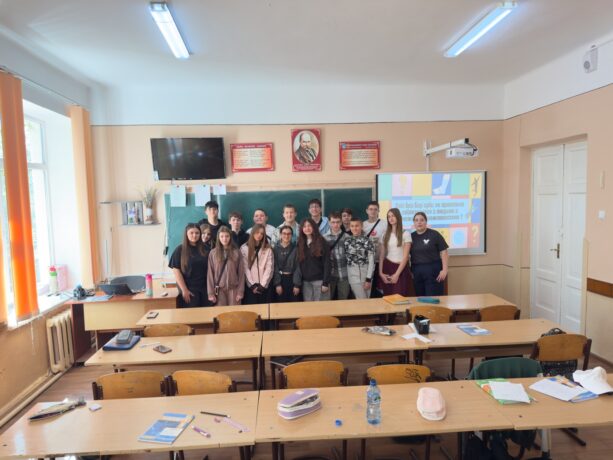
Special attention was given to the importance of respectful language and ethical communication. Students learned which expressions should be avoided and which, conversely, foster equal and respectful dialogue. They discussed why it is important to say “a person with a disability” rather than using offensive or diminishing language, and why pity, staring, or avoidance should be replaced with empathy and understanding.
An important part of the lecture focused on practical rules of interaction, including:
how to offer help appropriately;
why a wheelchair, crutches, or a prosthesis should be regarded as an extension of a person’s body;
how to behave naturally, without unnecessary tension, but always with respect.
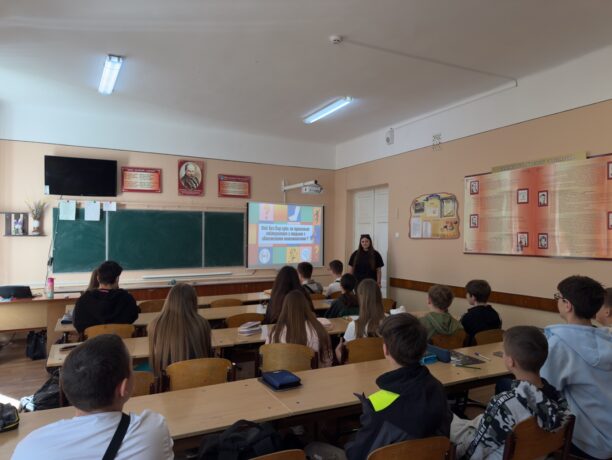
Particularly moving was the discussion about veterans with prosthetic limbs—individuals of extraordinary resilience whose example challenges stereotypes and demonstrates the strength of the human spirit every day. A simple gesture of gratitude—a sincere “thank you” or a hand placed over the heart—can sometimes mean far more than lengthy speeches.
At the end of the meeting, the students spoke about the role of a physical therapist and explained the core principle of their profession: we do not simply treat a disease—we help people learn how to live fully after it.
Such meetings are of tremendous importance. They help cultivate a culture of accessibility and inclusion from an early age, teaching children to see the person first and fostering a generation for whom respect, equality, and empathy are the norm. This is a meaningful social mission that future rehabilitation professionals are embracing today, because a barrier-free world begins with each of us.