

Innovations in Military Surgery Discussed at I. Horbachevsky Ternopil National Medical University
On May 14, 2026, the Morphological Building of I. Horbachevsky Ternopil National Medical University hosted a seminar entitled “Current Issues of Prehospital Medical Care for the Wounded on the Battlefield, During Evacuation, and in Specialized Medical Facilities.” The event brought together leading specialists from the Armed Forces of Ukraine, the Ministry of Health of Ukraine, and practicing military surgeons.
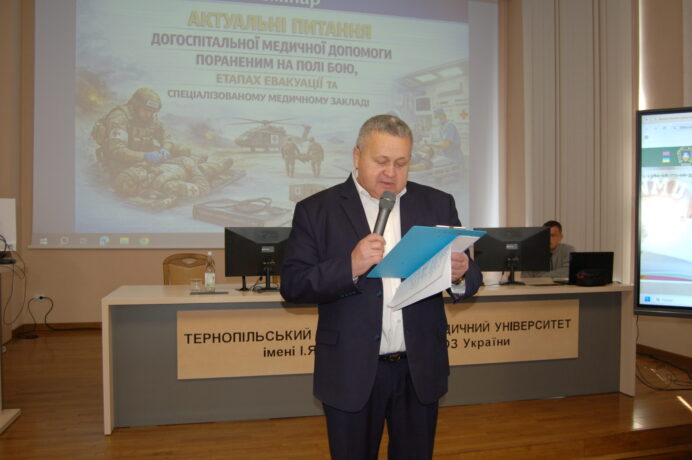
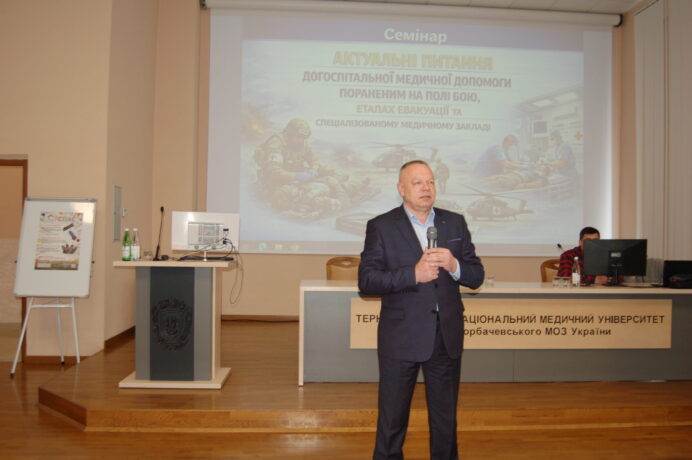
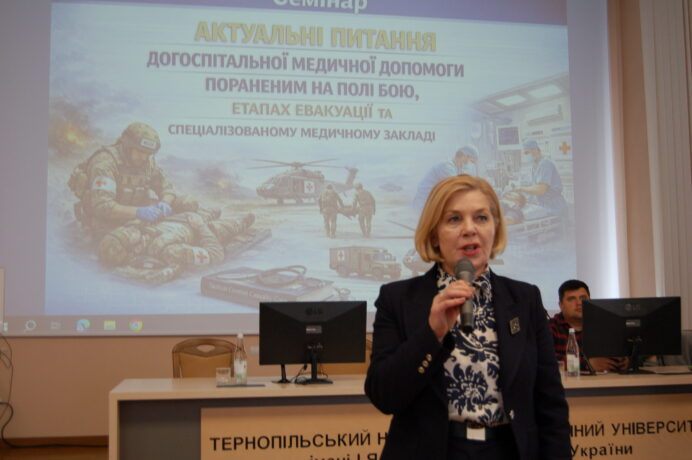
During the official opening, Professor Stepan Zaporozhan, Vice-Rector for Scientific, Pedagogical, and Clinical Work, addressed the participants and conveyed greetings from the Rector, Professor Petro Lykhatskyi. Additional welcoming remarks were delivered by Roman Svystun, Deputy Head of the Ternopil Regional Military Administration, and Olha Yarmolenko, Director of the Department of Health of the Ternopil Regional State Administration.
The central highlight of the seminar was a keynote presentation by Colonel Kostiantyn Humeniuk, Chief Surgeon of the Armed Forces of Ukraine. He delivered an in-depth analysis of tourniquet syndrome in the context of modern high-intensity warfare. The speaker emphasized that successful life-saving intervention depends on the timely conversion of the tourniquet at the stabilization point and on the use of extracorporeal detoxification, which enables preservation of limbs in 32.8% of patients previously considered beyond recovery.
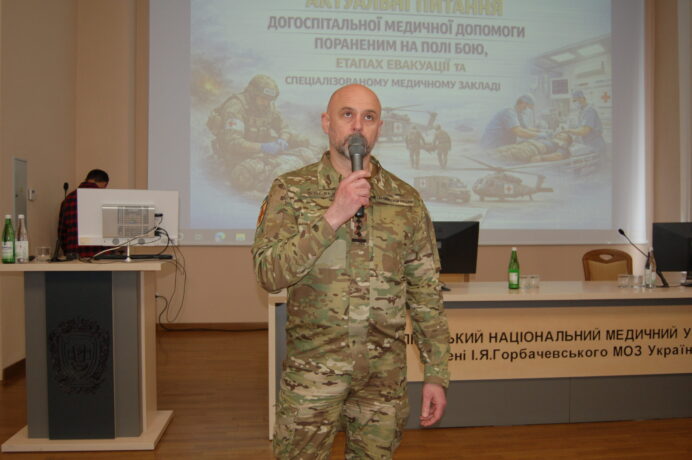
Professor Ihor Trutiak from Lviv presented the concept of amputation not as an endpoint, but as the first stage of rehabilitation and preparation for bionic prosthetics. He paid particular attention to the psychological dimension, noting that while international literature reports 13–20% rates of depression among amputees, the figures in Ukrainian wartime realities appear to be significantly higher.
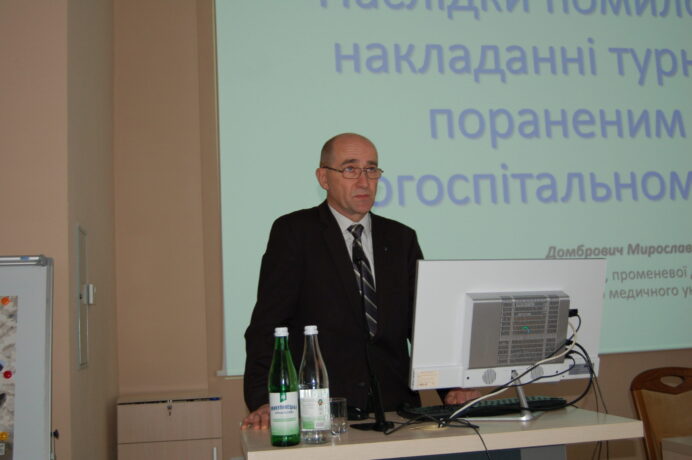
Associate Professor Myroslav Dombrovych of I. Horbachevsky Ternopil National Medical University initiated an important discussion on common errors at stabilization points. He stressed that tourniquets should only be applied when direct pressure and pressure dressings have proven ineffective.
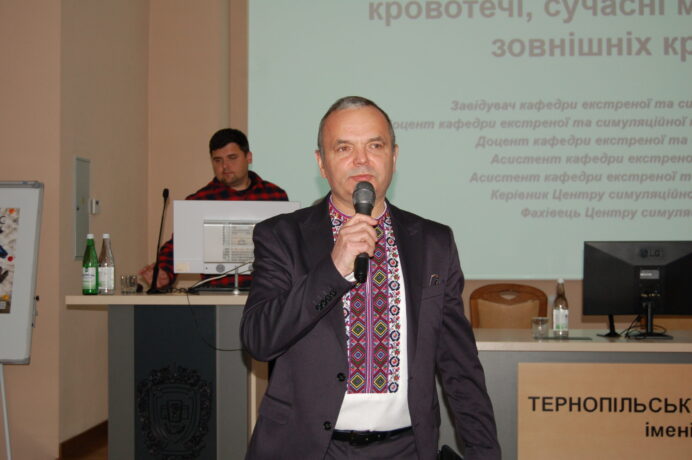
A session led by Professor Arsen Hudyma focused on modern methods of controlling external hemorrhage. Together with specialists from the university’s Simulation Training Center, he organized a large-scale demonstration of mechanical bleeding-control devices.
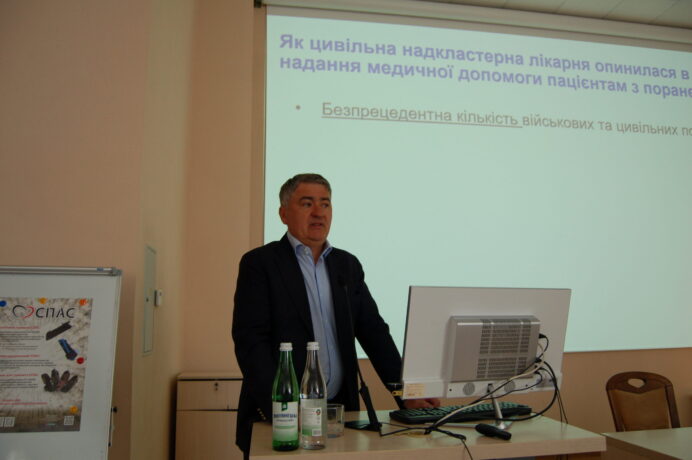
Serhii Hariian, Head of the Orthopedic and Trauma Department at the Ternopil Regional Hospital, presented clinical cases from the regional supercluster hospital, demonstrating how meticulous management of soft tissues and bone structures enabled preservation of limb function even in cases of severe osteomyelitis.
Captain Rostyslav Voloshchuk of the medical service addressed the topic of humane pain management.
Participants also explored an innovative approach to local antibiotic therapy, highlighting advances in infection prevention and treatment in combat-related injuries.
At the conclusion of the seminar, Major Liubov Kashytska presented complex cases of rhabdomyolysis based on the experience of the Mobile Hospital of the State Border Guard Service of Ukraine, emphasizing the critical role of intensive care in preserving internal organ function.
The seminar served as an important platform for exchanging expertise and advancing innovative approaches in military surgery, trauma care, and battlefield medicine, contributing to improved outcomes for wounded service members in Ukraine.