

TNMU Is Training a New Generation of Prosthetists
Tens of thousands of military personnel and civilians in Ukraine require prosthetic care. Due to the full-scale invasion, this number is rapidly increasing. To provide high-quality and timely assistance, qualified specialists are needed above all. This year, for the first time, four Ukrainian medical universities graduated prosthetist-orthotists who studied under a new master’s degree programme.
A Ukrinform correspondent visited I. Horbachevsky Ternopil National Medical University to find out how these professionals, who are so important for Ukraine, are trained, what students are taught, and what makes this profession unique.
“We Need Specialists Who Can Provide Comprehensive Support to Patients After Amputation”
In 2024, medical universities in Lviv, Kyiv, Ternopil and Kharkiv introduced master’s degree training in Prosthetics and Orthotics.
“Previously, technical universities trained prosthetic and orthopedic technicians who were primarily involved in manufacturing prostheses. The new master’s programme, however, prepares specialists with a broader range of competencies who can work as members of a multidisciplinary rehabilitation team. It is not only about the technical assembly of prostheses, but also about providing comprehensive support to patients after amputation — from the medical aspects of prosthetic care to helping people adapt to society.
Future specialists learn to work in cooperation with physical and rehabilitation medicine physicians, physical therapists, occupational therapists, psychologists and social workers. They study medical technologies, biomedical engineering and modern prosthetic methods, including bionic upper- and lower-limb prostheses,” explains Tetiana Bakaliuk, Head of the Department of Medical Rehabilitation and guarantor of the Prosthetics and Orthotics programme.
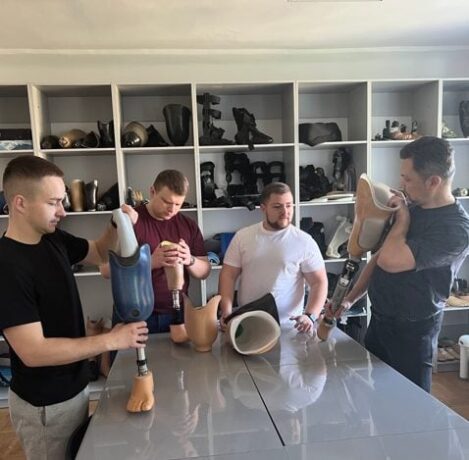
According to her, the war has caused a rapidly growing demand for highly qualified prosthetists in Ukraine. The master’s programme makes it possible to train specialists to a high standard within a relatively short period — the programme lasts one year and ten months. Graduates can work in clinics, prosthetic centres and manufacturing facilities, or continue their academic and teaching careers, including work in invention and innovation.
The introduction of a separate master’s programme for training modern prosthetics and orthotics specialists in Ukraine has received strong support from civil society and international partners.
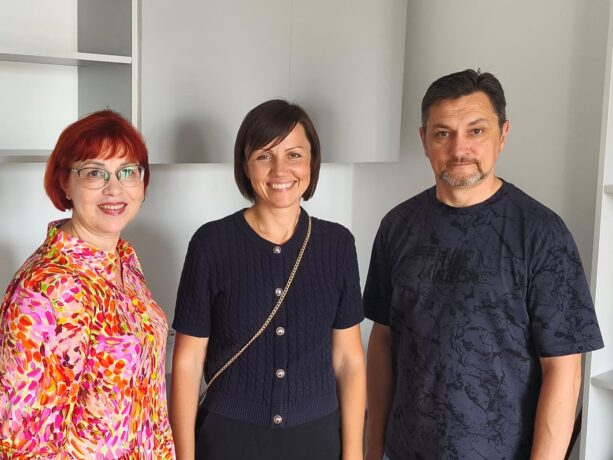
“We are grateful to the NGO Protez Hub and its head, Antonina Kumka, for her assistance in developing the educational programme and attracting international support. Thanks to her, we established cooperation with lecturers from Jönköping University in Sweden and participated in the international SU-CARE project, which focuses on improving education in prosthetics, orthotics and rehabilitation.
We also involved an American specialist, Austin Davids, an ABC-certified expert in orthotics and prosthetics, to teach our students a challenging course in biomechanics and pathological gait,” Tetiana Bakaliuk said.
Ternopil National Medical University has also established productive cooperation with Professor Hubert Egger, a prosthetics specialist from the University of Applied Sciences Upper Austria.
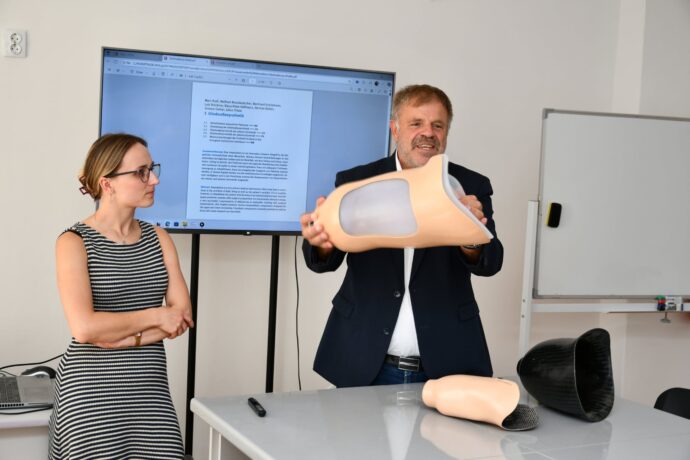
“Professor Egger is not only a lecturer but also an innovator in the field of prosthetics. Alongside teaching, he develops innovative solutions that are now used by leading global companies. Professor Hubert Egger makes his visits during his own vacation, as official business trips to a country at war are currently not possible. He works with students, regularly participates in our scientific conferences and shares his expertise and developments,” Ms Bakaliuk says.
“We Made the Prosthesis Ourselves, and It Was Really Cool”
I meet students studying Prosthetics and Orthotics at the Department of Medical Rehabilitation of the medical university, which is located at one of the prosthetic and adaptation centres. It is here that future specialists acquire the fundamentals of their profession through hands-on training: they go through all stages of prosthesis selection and fabrication and work directly with patients.
Most of the students in the classroom are men, with only one woman. I ask the students what motivated them to pursue such a challenging but highly important profession.
Bohdan Slipets from Chernihiv initially worked as a paramedic and later as a rehabilitation specialist.
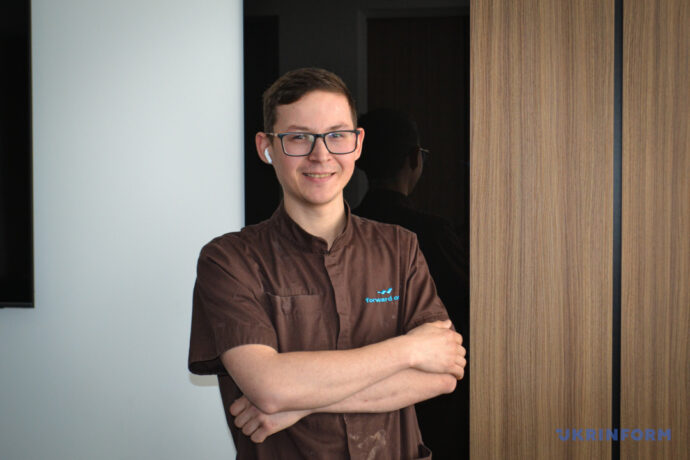
“Three years ago, prosthetic services were difficult to access in our city. At the hospital where I worked, there were patients who needed the assistance of a prosthetist, but it was very difficult to find a specialist. Then I thought, why not become a prosthetist myself? I started searching online to find out how I could enter the profession and enrolled in the master’s programme at Ternopil National Medical University. I am happy that I made this choice and acquired a profession that is extremely important today,” the student says.
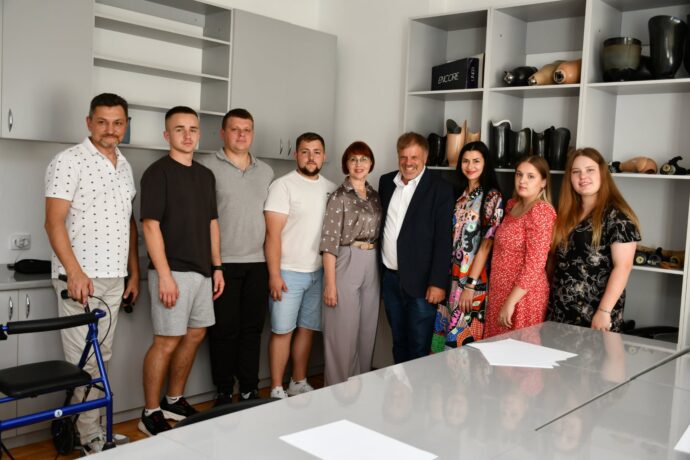
Bohdan is already completing his studies while working in his profession. And he is not the only one. Some of the other students have already found employment as well.
Illia Kozachok entered the Prosthetics and Orthotics programme after completing a bachelor’s degree in emergency medicine.
“I started working just a few weeks after beginning my master’s studies. I immediately apply the knowledge I gain at the university in practice. There are quite a lot of patients now, so there is plenty of work as well,” Illia says.
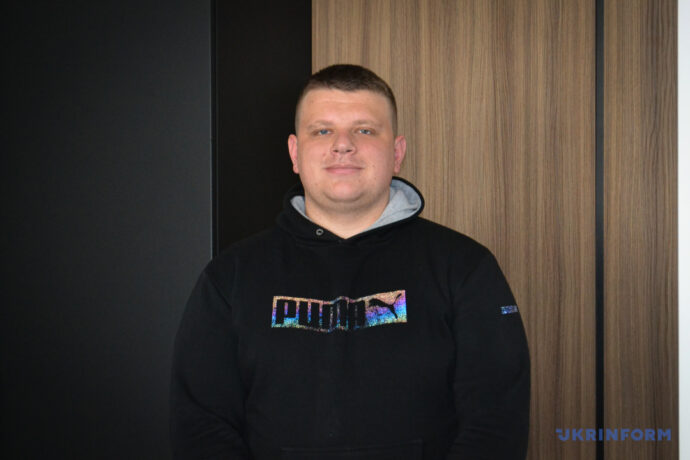
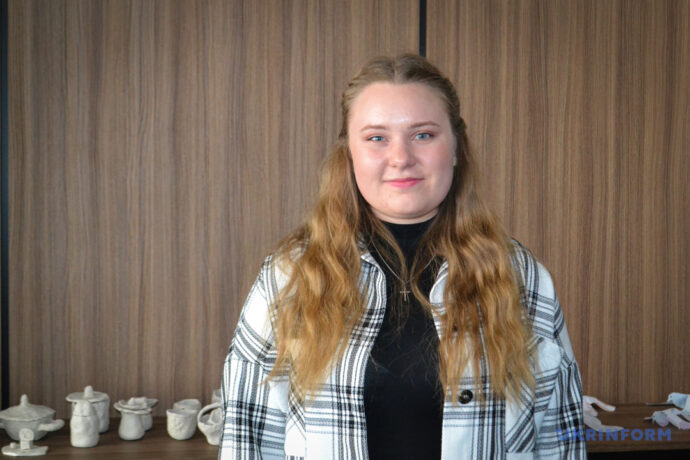
Zoriana Kinakh enrolled in the programme after qualifying as a nurse. She enjoys gaining new knowledge and practical skills.
“At first, we studied basic subjects, but even subjects such as surgery and neurology, which I had already studied as part of my nursing education, were taught from a different perspective — from the standpoint of prosthetics. So we gained new knowledge that we had not acquired before.
There are also many courses taught by international lecturers. But what I value most is the practical training. We went through all the stages of making a prosthesis. We took measurements ourselves, made a plaster negative and a plaster positive, and then assembled everything together. We spent about a week assembling the prosthesis, and we actually made it ourselves. It was really cool, and we gained tremendous experience,” Zoriana says.
Working with Plaster and Millimetre-Level Precision
After meeting the students, we head with them and their mentors to the training laboratories, where practical classes take place and prostheses are created, giving people with amputations a chance to regain a full and independent life. I ask them to explain and demonstrate the entire process.
“A prosthetist’s work with a patient does not begin with making the prosthesis itself, but with a comprehensive assessment of the person as part of a multidisciplinary team. Specialists assess the patient’s condition, the degree of tissue healing, the formation of the residual limb and scars, and determine whether the person is ready for prosthetic fitting at that particular time.
In some cases, the process has to be postponed and the patient referred to other specialists for additional preparation,” explains Yurii Zavidniuk, a physical and rehabilitation medicine physician.
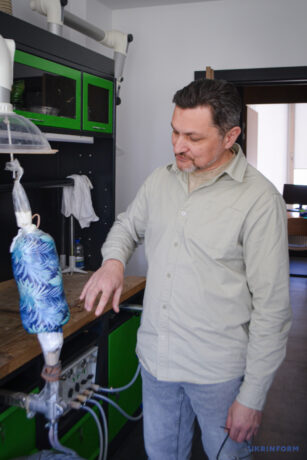
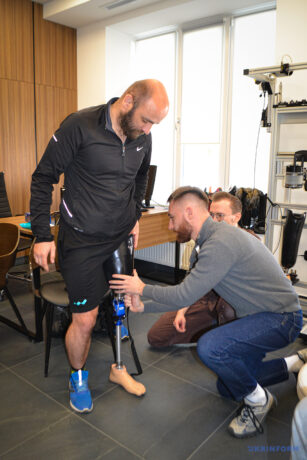
The first stage of prosthesis fabrication is creating a plaster negative, a mould taken directly from the patient’s limb. A plaster positive is then made from it — an exact replica of the residual limb, which the prosthetist subsequently works with.
This work requires the specialist to take a large number of measurements. Bohdan Slipets shows me his working notebook. He admits that what may seem like an ordinary student item is actually an indispensable tool in his professional work.
“I record all the necessary information about the patient here — the parameters of the amputated and healthy limbs, anatomical features and load-bearing points. This data is needed to ensure that the future prosthesis is not only functional but also matches the patient’s anatomy as closely as possible and provides a symmetrical appearance,” Bohdan explains.
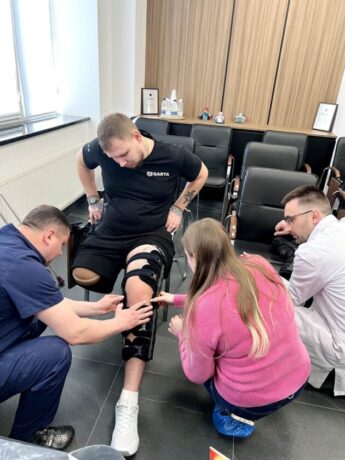
After plaster is poured into the negative, a positive is obtained, which is then manually refined. The prosthetist adjusts the shape literally millimetre by millimetre — removing material in some places and adding it in others to create the correct pressure and relief points.
Particular attention is paid to areas where bones protrude in order to prevent excessive pressure and pain while using the prosthesis.
“Based on this plaster positive, the prosthetic socket is formed — one of the key components of the future prosthesis. This component is custom-made for each patient.
Patients can choose the colour or design of the socket. We can laminate chevrons or a pattern from their favourite T-shirt into it, or even make it glow in the dark. Such details bring positive emotions.
We also manufacture prosthetic sockets using 3D printers provided to us by the Government of Japan. Students are also learning how to work with this equipment. The next stage is prosthesis assembly, fitting and adjustment,” says Mr Zavidniuk.
“I Was So Happy When I Could Pick Up a Cup of Coffee for the First Time After My Amputation”
An important part of the work is establishing effective communication with the patient. Students admit that this can sometimes be challenging, but the more practice they get, the better they become at it.
At the prosthetic and adaptation centre where the future master’s students train, I meet Andrii, a serviceman of the 10th Mountain Assault Brigade. Eight months ago, he suffered a severe injury in the Donetsk region and lost his arm. In Ternopil, he is undergoing rehabilitation and learning to use a bionic prosthesis.
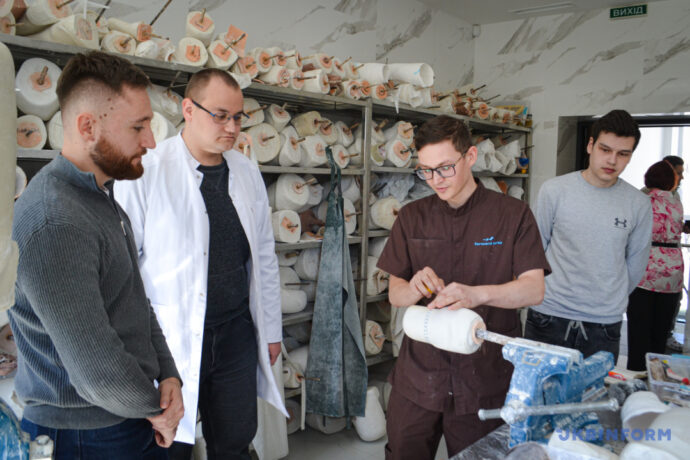
“Andrii is unique because he learned to control the bionic hand so quickly that we were all amazed. From our experience, we know that this is a very complex process. A person has to learn to control the movements of the prosthesis with their muscles, squeeze the hand more or less firmly, and regulate the amount of force.
But Andrii mastered it so incredibly quickly that he succeeded almost from the very first attempts,” said physical and rehabilitation medicine physician Yurii Zavidniuk.
The serviceman admits that he was eagerly awaiting the fabrication of his prosthesis.
“I really wanted to try using it. During the preparation process, I sometimes wondered why I had to do certain exercises and what they were for,” Andrii says.
I ask him which moment over the past few months he remembers most vividly.
“When I put on the prosthesis for the first time, exercised my hand and immediately went to have some coffee. I tried to pick up the cup, and I managed to do it. I still remember that feeling,” the man says.
Yurii Zavidniuk notes that it can sometimes be difficult to explain to patients that all the procedures and activities carried out before prosthetic fitting have a specific ultimate purpose.
“But once they begin using their prostheses, they understand what it was all for. That is why, during the preparation period, we have to maintain patients’ motivation to do what is necessary. This can be especially difficult when the waiting period is long.
A positive atmosphere is very helpful because it encourages patients to become actively involved in the process. We explain this to our students and share our experience of how to overcome such challenges,” the physician notes.
The team at Ternopil National Medical University believes that practical knowledge, innovative developments and advanced international experience are among the key priorities in training a new generation of prosthetists.
As early as June, the university will graduate its first master’s students, who will help Ukrainians living with amputations regain freedom and independence in their lives.