

TNMU Hosts Training on the Use of POCUS in Trauma and Shock
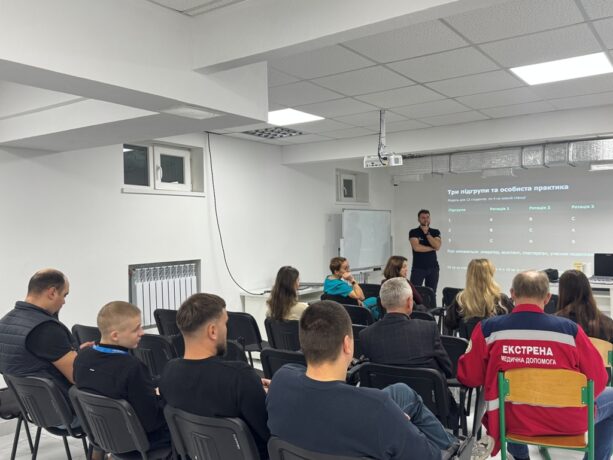
On 12 October 2026, the Department of Emergency and Simulation Medicine at I. Horbachevsky Ternopil National Medical University held a training session on ultrasound diagnostics in emergency medicine.
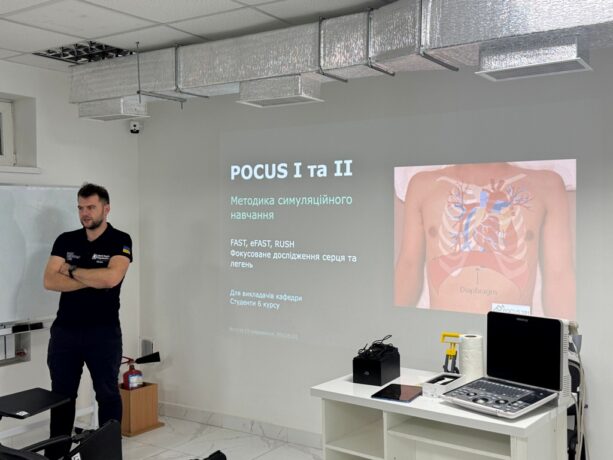
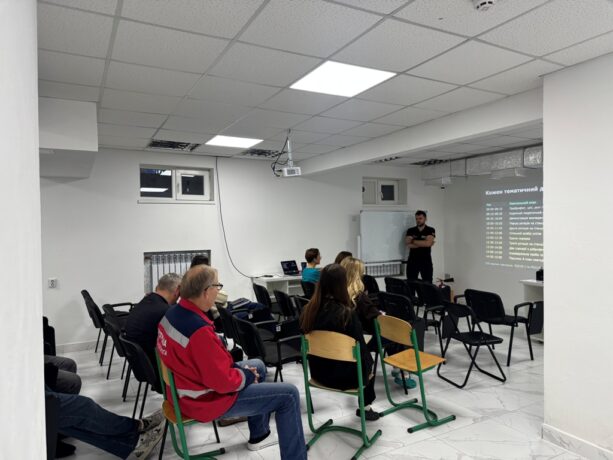
The event was organised for academic staff who teach courses in this field. Its aim was to enhance professional competencies, deepen knowledge of point-of-care ultrasound (POCUS), and introduce modern diagnostic algorithms into the educational process.
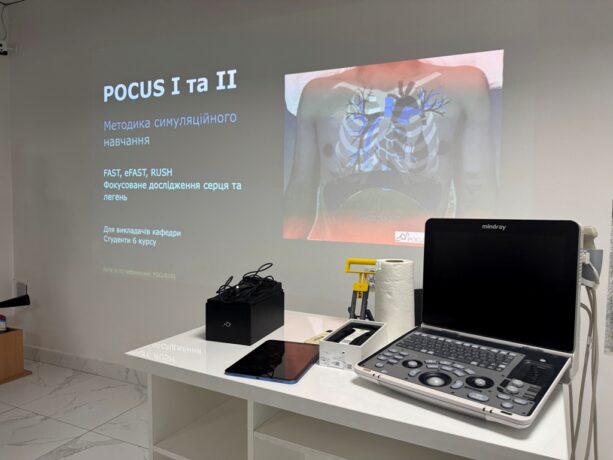
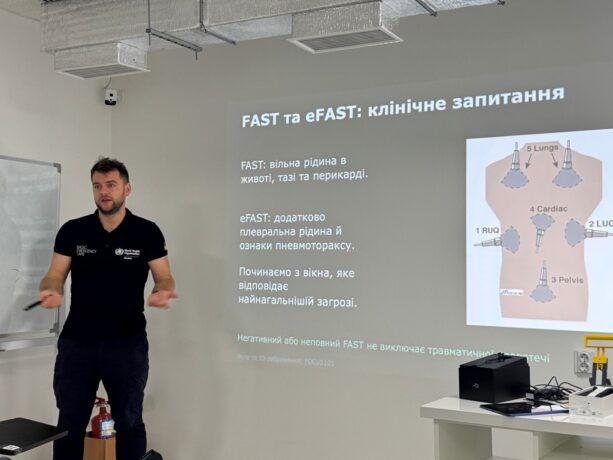
The theoretical part of the training was delivered by Roman Huk, Assistant Lecturer at the Department of Emergency and Simulation Medicine. His lecture provided a detailed overview of the main ultrasound protocols used in emergency medicine, including:
FAST (Focused Assessment with Sonography for Trauma) – a rapid ultrasound assessment protocol for trauma patients used to detect free fluid in the abdominal cavity and pericardium.
eFAST (Extended Focused Assessment with Sonography for Trauma) – an extended ultrasound assessment protocol for trauma patients that additionally includes examination of the pleural cavities to detect pneumothorax and haemothorax.
RUSH (Rapid Ultrasound in Shock and Hypotension) – a rapid ultrasound examination protocol for patients with shock and hypotension, aimed at identifying the potential causes of haemodynamic instability.
Particular attention was paid to the clinical significance of each protocol, examination algorithms, the correct selection of ultrasound views, and the interpretation of findings.
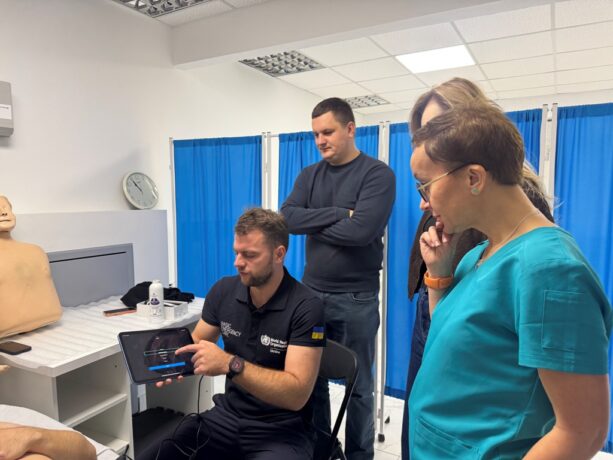
Following the theoretical session, participants proceeded to practical training in ultrasound protocols. Academic staff had the opportunity to perform the key steps of FAST, eFAST and RUSH independently, improve their scanning techniques, practise correct probe positioning, and identify key anatomical structures.
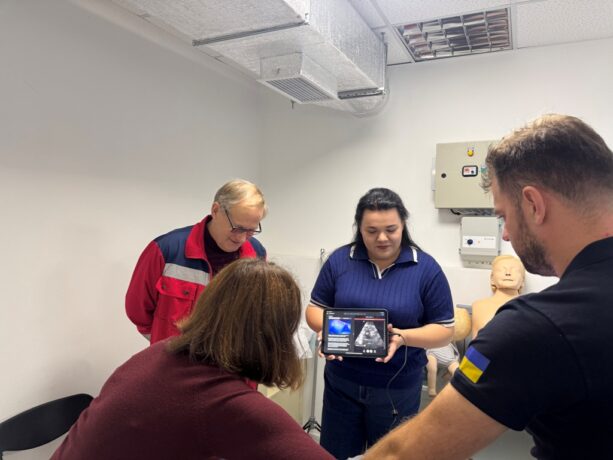
The training provided a platform for active professional interaction. Participants discussed the application of ultrasound protocols in various clinical scenarios, explored practical aspects of their use in emergency care, and received comprehensive answers to their questions.
Organising such training sessions is an important component of the continuous professional development of the Department’s academic staff. These initiatives help improve teaching methods and integrate modern diagnostic technologies into the educational process.